Slow Materials, Slow Money: Can Design Decelerate?
Two events that I’m trying to tie together to glean some connections. The CHI panel on Regenerative Material Ecologies in HCI, and the Workshop on the Future of Money and HCI.
A connecting theme amongst many, might be how the two sessions tackled the same paradox: how do we slow down in urgent times?
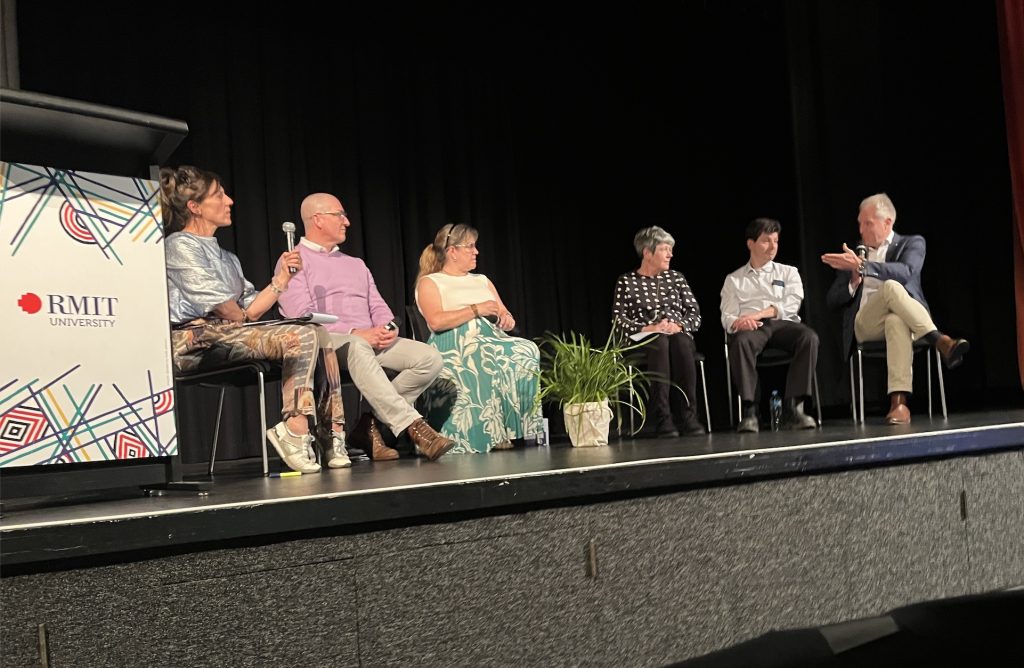
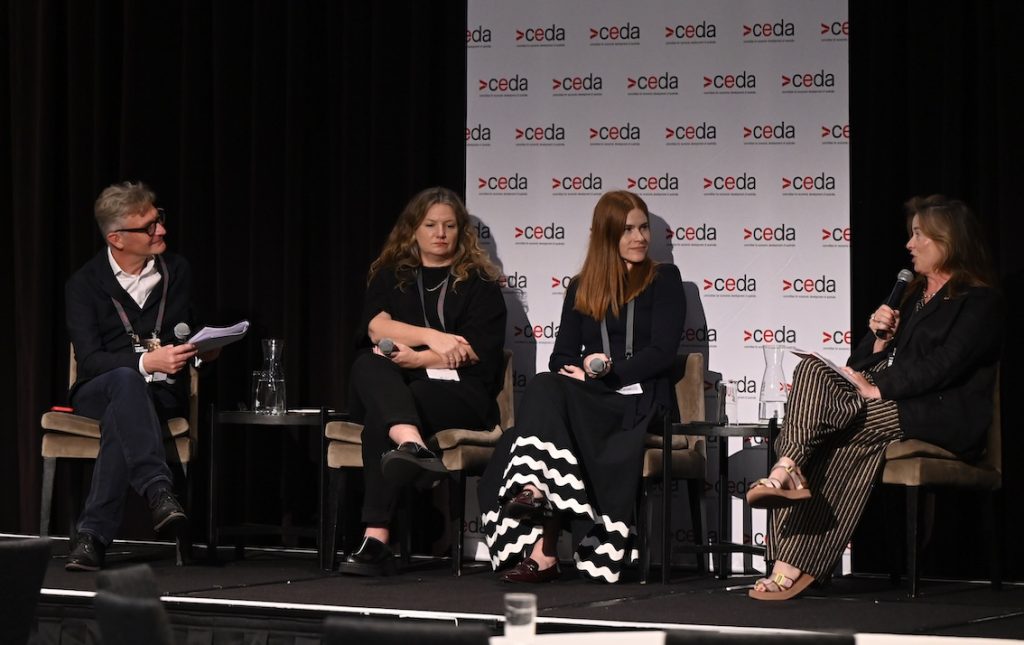
Smart, sensitive moderation by Iohanna Nicenboim for the Regen Material panel, involved nine panelists (see bottom) to think with us about how a regenerative approach could take shape in HCI through material-driven design and practice-based research.

Notably from my perspective the paradox of “We have to act fast,” in the context of climate emergency, and yet speakers consistently advocated “slowing down, scaling down” as essential to regenerative practice. Laura Devendorf offered a nuanced bridge: “Maybe as academics, we are really good at being slow,” suggesting different actors hold different temporalities. Her insight suggesting how speed and slowness aren’t opposites but complementary forces in systemic change.
The regenerative design panel also offered an unexpected insight in to failure when Laura Devendorf shared her failed attempt to recreate the Stanford bunny with balloons.

“This particular insight emerged from a performance with Redeform at the annual conference of Tangible and Embodied interaction (Devendorf and Ryokai 2015b). I wanted to demonstrate the unique ability of my system to create large-scale models by building a lifesize model of the Stanford Bunny, a common test bench model for 3D printers, from balloons. Because the audience of the performance would be largely composed of HCI researchers, my goal was to bring forth reflections on heuristics for 3D printing through a spectacular construction that would be impossible with other 3D printing technology. But after a total of 15 hours of construction and a few breezes, the project ultimately failed in the sense that the balloons never quite made it into the form of the bunny. It failed because I mistakenly believed the use of my technology would help me overcome the properties of the materials I was working with. Even though my motivation for the system was collaboration with nonhuman forces, I found that I was not collaborating with the materials, I was attempting to control them and fit them into a shape they were not suited to fit. I did not listen to the balloons enough to realize that balloons do not intend to be tied into static shapes; they want to be with the wind.” from Laura’s PhD: https://escholarship.org/content/qt40z5g3sz/qt40z5g3sz_noSplash_9a85b17bf42ed5633e7bb21d312ddcb1.pdf
Rather than seeing this as a setback, she described it as “a real pivotal moment” that taught her humility. The panel embraced this perspective – suggesting we need to become “more comfortable with uncertainty” and “create those moments where you’re wrong.” Unlike traditional design processes that seek to eliminate failure, regenerative approaches deliberately design with failure as a material itself
The money workshop introduced by Jeff Brozena Johnna Blair, Ph.D. Jofish Kaye and John Vines explored these temporal politics through tangible designs. Some participants created “slow money” – currencies that deliberately resisted our culture of instant transactions. One designer mandated all purchases happen in physical stores, transforming shopping from click-and-buy convenience into embodied ritual. Another crafted currency requiring community consensus before spending, slowing transactions to democracy’s deliberate pace.

The money workshop also explored the potential for intentionally imperfect currencies – systems designed to “fail” in specific ways to prompt reflection. Participants created monies that expired quickly, required collective agreement for spending, or added friction to transactions. These weren’t bugs but features, deliberately incorporated limitations that transformed how people engage with value. Both sessions revealed a profound shift: moving from optimizing systems for seamless efficiency toward designing fruitful failures that teach, connect, and reveal. Whether working with uncooperative materials or inconvenient currencies, the resistance we encounter might be our most valuable design resource.
Both sessions revealed slowness as something far richer than mere deceleration. Members of the Regen Materials panel exploring how working with living materials, described temporalities “totally different” from human scales – organisms demanding patience, attention, and acceptance of non-linear processes. This resonated with workshop participants who discovered that adding friction to money didn’t just slow spending; it fundamentally altered relationships with value, community, and purpose.
Miek Dunbar and I threw in a small speculative extension to KinBank that suggested AI as fiduciary within our bank accounts. The video below hints at how a ‘values led’ third party AI might steer us toward ecological decisions as we become bound to particularly local forests:
The convergence across the two events was striking. Whether working with living organisms or economic systems, participants discovered that imposing human timescales often perpetuates the very problems we’re trying to solve. True regeneration – ecological or economic – requires what Indigenous knowledge systems have long understood: working with time rather than against it.
Regenerative Materials Panel:
Elvin Karana Holly McQuillan Fiona Bell Doenja Oogjes Laura Devendorf Yasuaki Kakehi Lining Yao Karey Helms Marie Louise Juul Søndergaard
https://dl.acm.org/doi/10.1145/3706599.3706711
HCI Money Workshop:
Johnna Blair, Ph.D., Jeff Brozena, John Vines, Jofish Kaye, Mark Matthews, Saeed Abdullah
https://dl.acm.org/doi/10.1145/3706599.3706711
#SlowDesign #RegenerativePractice #MoneyDesign #TemporalDesign #RMIT hashtag#SystemicChange
Related posts
The Model Is the Problem, Not the Technology
A Speedy report back on last nights opening RMIT Regenerative Futures Institute Explainer event that...
Cooperation, or the Lack of It
Two events I attended recently, on the surface, have almost nothing in common — one was an exhibitio...

Staying in the Aporia
Augustine, writing to God in Book XI of the Confessions, admits he doesn’t know what time is....
Pirate DRS 2026
Thank you to all the speakers who survived the onslaught of “walk the plank”, “pir...
Data Otherwise
Data Otherwise: More-than-Human Data Practices at DRS 2026 What if the problem with data isn’t...
DRS 2026 summary and list of RMIT papers
I’ve been fortunate to be at DRS 2026 in Edinburgh this week, about to catch a train and then...
Making Knowledge, Fragmenting Certainty
Friday 22nd, 2026 at Monash, design researchers presented artifacts from their practice—Jon McCormac...
YOU ARE NOT FEEDSTOCK
Last week at The Capitol Melbourne, we launched the RMIT Regenerative Futures Institute. I want to t...
What Doesn’t Need To Be New: Two Launches, One Week, One Paradox
Last week brought two events exploring regenerative futures from very different angles. On one after...

What does it mean for a university to be alive?
The RSA (The royal society for arts, manufactures and commerce), RMIT’s Regenerative Futures I...
Launching RFI…!
Universities are extraordinarily good at adding things. Sustainability offices. Innovation hubs. Int...
Three provocations on designing futures worth watching / reflecting…
Over recent weeks, we’ve been hosting talks from visitors who come through Melbourne. Always fun to...
What Would It Take to Read the Label?
February’s Futures Collider at RFI put three provocations in a room and asked people to act ou...
What Gets Counted When Institutions Choose Speed
Two Sessions at FACT 2026 Reflections on qualitative knowledge, AI efficiency pressures, and what ge...
Two Rooms, Two Temporalities
Two events at RMIT over the past couple of weeks revisited the temporal challenges at the heart of h...

Temporal Traps
Ending the year between collapse and care: three December gatherings on time, action, and giving bac...