Rep / Non-Rep & Foreclosure
Catching up with things, and the first of two posts this week, reflecting on events last week. Staying with this question of foreclosure – how do representational cultures of all kinds, foreclose on futures?
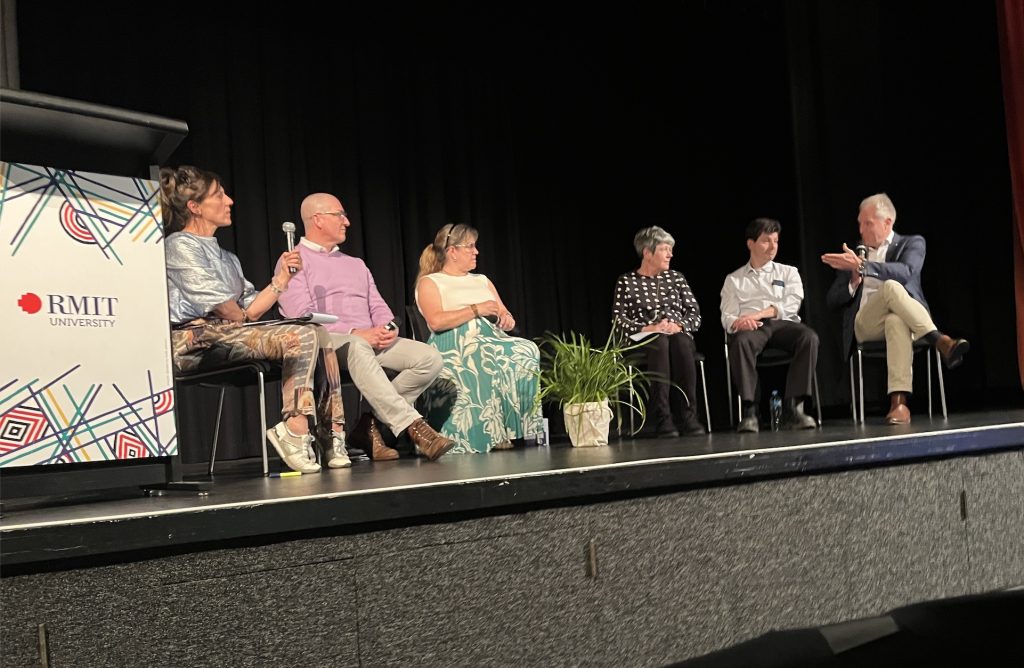
The Brain Health Futures Summit led by the truly inspiring Bonnie Shaw last week revealed a further interesting ‘futures’ contradiction that remains, as arguments are made toward a ‘Brain Health Future’ predicated on both a representational model of brains as atomised units of productivity, and non-representational ones in which cultures of care support social and intellectual nourishment.

The Economic Case by Harris Eyre, Head of Neuro-Policy positioned brain health as a $26 trillion opportunity, reframing cognitive wellbeing as “brain capital” for national competitiveness. Social production (volunteering, care, community support) represents hundreds of billions annually in Australia, I think he suggested 14 percent of GDP, and larger than the mining sector but invisible in economic frameworks.

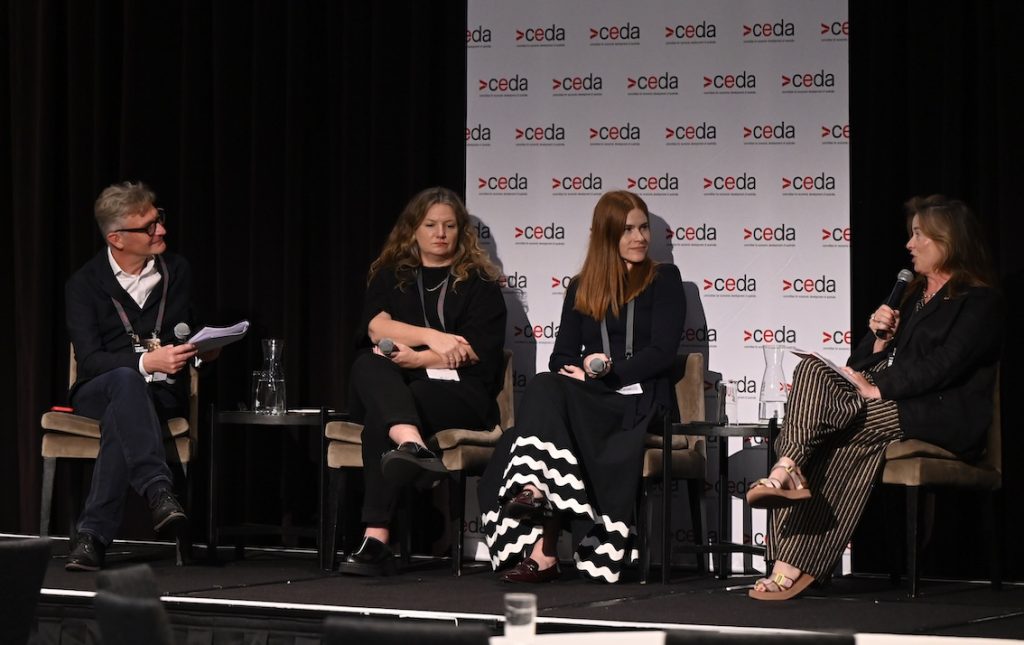
The Relational Reality told a different story through A/Professor Jo-An Occhipinti (née Atkinson), followed by a panel with Ika Trijsburg Kier Paterson Paterson, Briony Rogers, and Michael Hogan on climate, Indigenous healing, and community infrastructure emphasising what economic framing excludes: brains are fundamentally shaped by place, culture, relationships, and collective conditions, an unpaid system of social contribution and mutual support that sustains communities.

The Contradiction: To make brain health matter to policymakers, Eyre et al translate it into GDP metrics. But this monetises precisely what resists monetisation. Grandparents caring for children gets counted because it enables parents to work. Volunteering matters because it acts as a stabiliser. Even intergenerational reading programs are justified through preserved brain volumes. Everything must serve productivity.
The Foreclosure: Every time we translate community support into economic equivalents, we foreclose other ways of valuing these activities. If brain health is infrastructure for productivity, interventions get designed to optimise economic output rather than strengthen relational conditions that actually support cognition.
This isn’t to dismiss economic arguments, they’re strategically necessary. But we need to recognise the trap: the same frameworks that might secure investment also risk transforming brain health into another site of extraction, where cognitive wellbeing becomes instrumentalised for competitive advantage rather than cultivated through collective care.
Perhaps the question isn’t how to make brain health count economically, but whether economic representation itself, like the data models and AI frameworks we’ve seen foreclose other futures, is structurally incapable of holding what matters most about cognitive wellbeing: the unmeasured, the relational, the collective conditions that resist translation into productive units.
Related posts
The Model Is the Problem, Not the Technology
A Speedy report back on last nights opening RMIT Regenerative Futures Institute Explainer event that...
Cooperation, or the Lack of It
Two events I attended recently, on the surface, have almost nothing in common — one was an exhibitio...

Staying in the Aporia
Augustine, writing to God in Book XI of the Confessions, admits he doesn’t know what time is....
Pirate DRS 2026
Thank you to all the speakers who survived the onslaught of “walk the plank”, “pir...
Data Otherwise
Data Otherwise: More-than-Human Data Practices at DRS 2026 What if the problem with data isn’t...
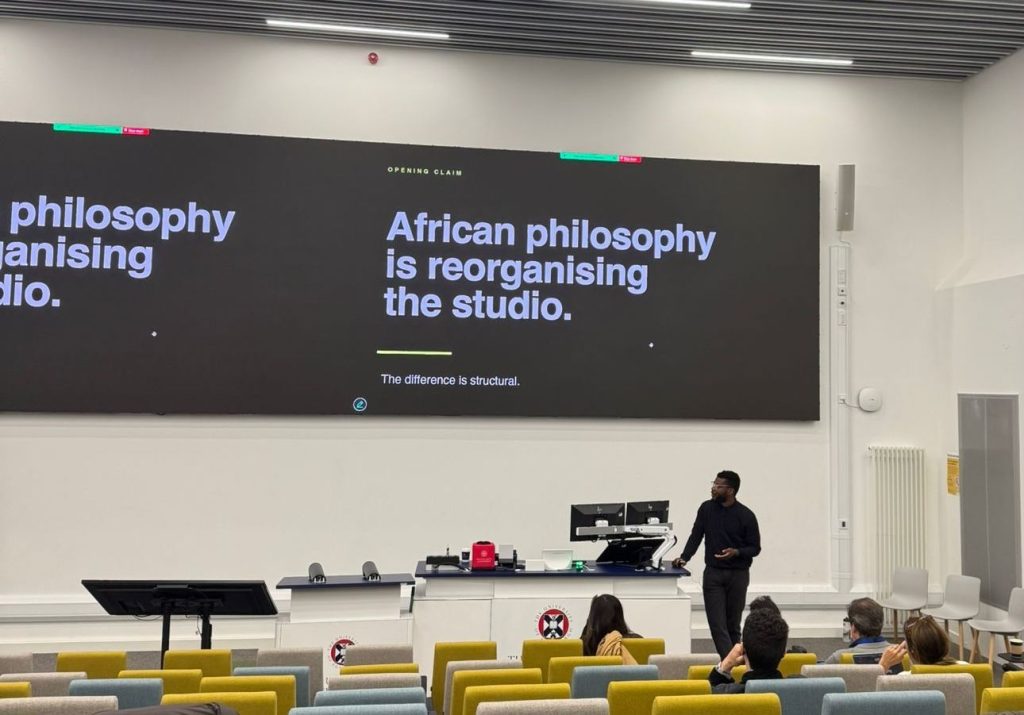
DRS 2026 summary and list of RMIT papers
I’ve been fortunate to be at DRS 2026 in Edinburgh this week, about to catch a train and then...
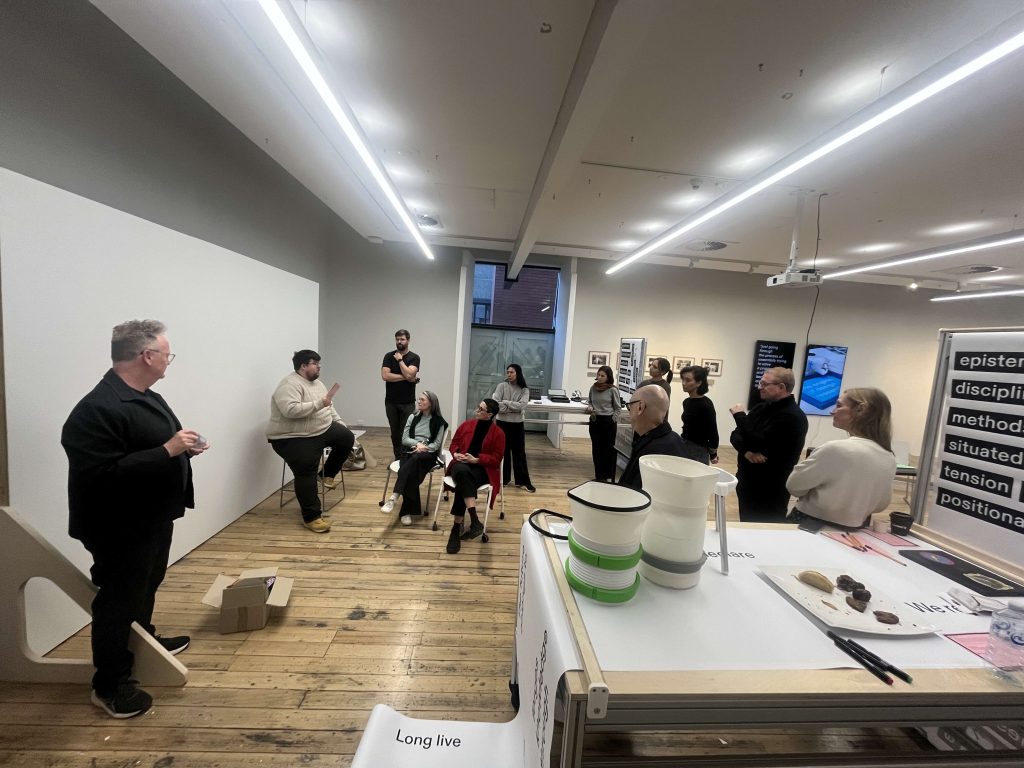
Making Knowledge, Fragmenting Certainty
Friday 22nd, 2026 at Monash, design researchers presented artifacts from their practice—Jon McCormac...
YOU ARE NOT FEEDSTOCK
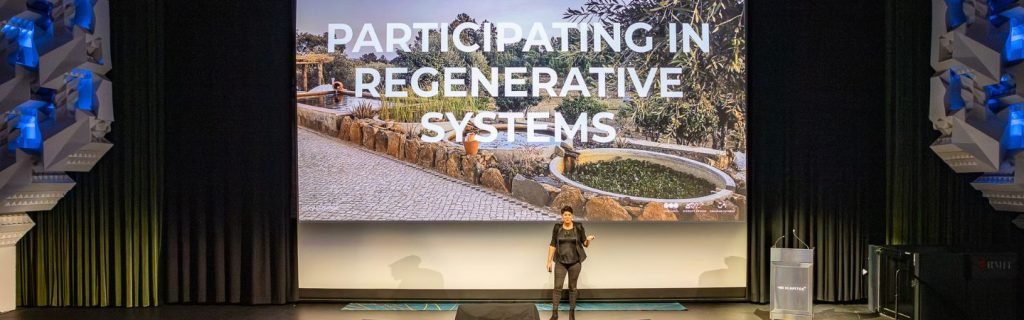
Last week at The Capitol Melbourne, we launched the RMIT Regenerative Futures Institute. I want to t...
What Doesn’t Need To Be New: Two Launches, One Week, One Paradox
Last week brought two events exploring regenerative futures from very different angles. On one after...

What does it mean for a university to be alive?
The RSA (The royal society for arts, manufactures and commerce), RMIT’s Regenerative Futures I...
Launching RFI…!
Universities are extraordinarily good at adding things. Sustainability offices. Innovation hubs. Int...
Three provocations on designing futures worth watching / reflecting…
Over recent weeks, we’ve been hosting talks from visitors who come through Melbourne. Always fun to...
What Would It Take to Read the Label?
February’s Futures Collider at RFI put three provocations in a room and asked people to act ou...
What Gets Counted When Institutions Choose Speed
Two Sessions at FACT 2026 Reflections on qualitative knowledge, AI efficiency pressures, and what ge...
Two Rooms, Two Temporalities
Two events at RMIT over the past couple of weeks revisited the temporal challenges at the heart of h...

Temporal Traps
Ending the year between collapse and care: three December gatherings on time, action, and giving bac...