Three provocations on designing futures worth watching / reflecting…
Over recent weeks, we’ve been hosting talks from visitors who come through Melbourne. Always fun to bring folk into the Design School to ask ourselves what we design, how we come to know communities, technology, and working with multi-species.
Excuse the simple video recordings… straight from the laptop!
Laura Galluzzo and Davide Fassi from POLIMI DESIS Lab shared fifteen years of situated social innovation, embedding researchers in a Milan municipal market for five years as neighbours, not consultants. They were refreshingly honest about challenges: participation is never equal, communities exhaust, and knowing when to exit remains unresolved. Their work inviting people to embody plants or marginalized humans to reimagine public spaces particularly resonated.
Martijn de Waal from Amsterdam explored civic economies and programmable value systems. As blockchain and tokens proliferate, we face a choice: allow Silicon Valley to build surveillance pricing, or design systems recognising care work and non-human stakeholders? A sharp question he posed: “The goal is to socialise the economy, but we might do exactly the opposite, economising the social.” that took me back to the digital economy ‘good’ work that we did at Design Informatics, this remains the knife’s edge we’re walking.
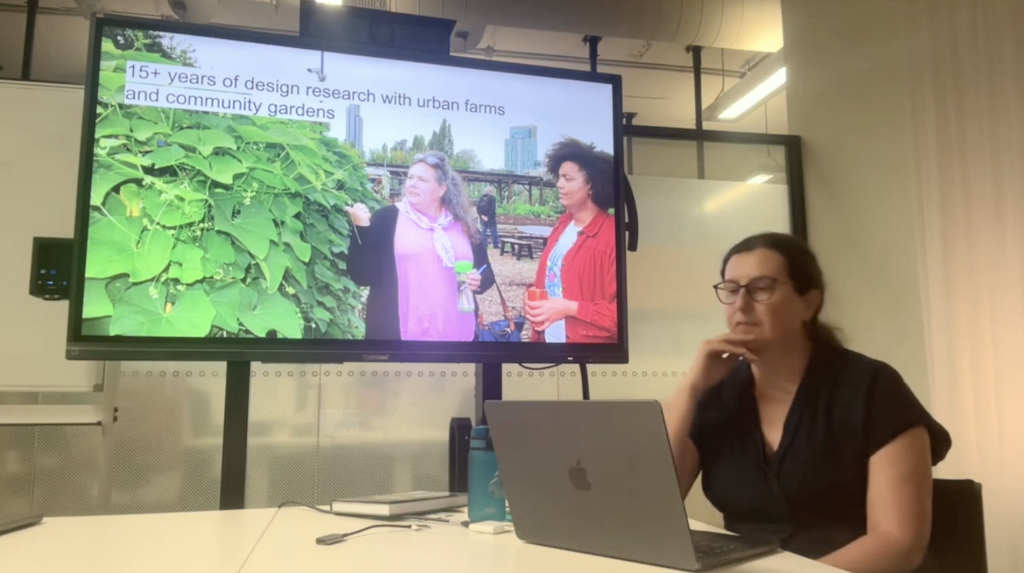
Sara Heitlinger from the Centre for Human‑Computer Interaction Design at City St George’s, University of London, shared her decade designing more-than-human smart cities at Spitalfields City Farm. Rather than efficiency-obsessed approaches, she asks: what if cities recognised interrelations between species? Through algorithmic food justice, seed libraries preserving migrant heritage, and role plays where humans embody river carp to negotiate water governance, she showed how participatory design can include more-than-human voices.
What connects these? Each refuses easy technologisation of social and ecological problems. Each works with communities over years, building trust rather than parachuting in. Each grapples with representing marginalised voices: human communities, invisible care work, or non-human species.
Each confronts a fundamental challenge: how do we enable collective decision-making without drowning people in complexity? Value care without reducing it to points? Use technology to expand rather than constrain possibility?
These questions play out in markets, cooperatives, farms, and river ecosystems. The work is situated, messy, ongoing, exactly as it should be.
The question isn’t whether we’ll have smart cities or civic economies. These are being built now. Who gets to design them, whose values do they encode, and what worlds do they make possible?
RMIT University RMIT College of Design and Social Context
hashtag#DesignResearch hashtag#ParticipatoryDesign hashtag#MoreThanHuman hashtag#CivicEconomies hashtag#SmartCities
Related posts
Small enough to knock on the door
You’ll have to put up with as few too many posts from me during the Energy Futures season for RMIT R...
The Model Is the Problem, Not the Technology
A Speedy report back on last nights opening RMIT Regenerative Futures Institute Explainer event that...
Cooperation, or the Lack of It
Two events I attended recently, on the surface, have almost nothing in common — one was an exhibitio...

Staying in the Aporia
Augustine, writing to God in Book XI of the Confessions, admits he doesn’t know what time is....
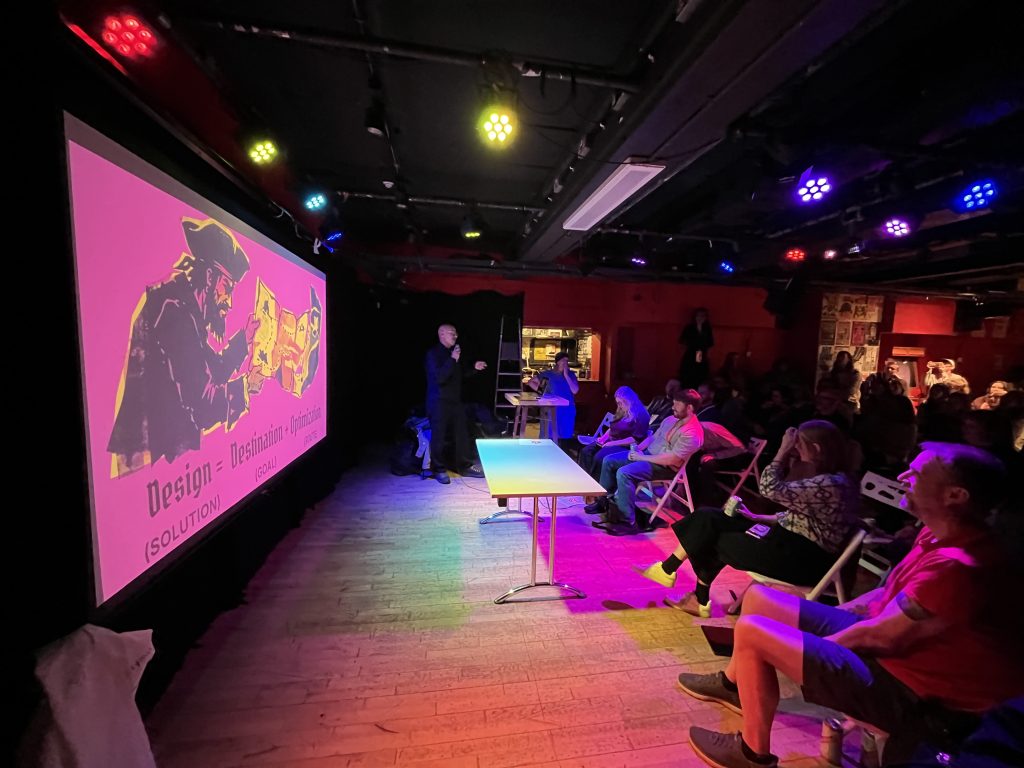
Pirate DRS 2026
Thank you to all the speakers who survived the onslaught of “walk the plank”, “pir...
Data Otherwise
Data Otherwise: More-than-Human Data Practices at DRS 2026 What if the problem with data isn’t...
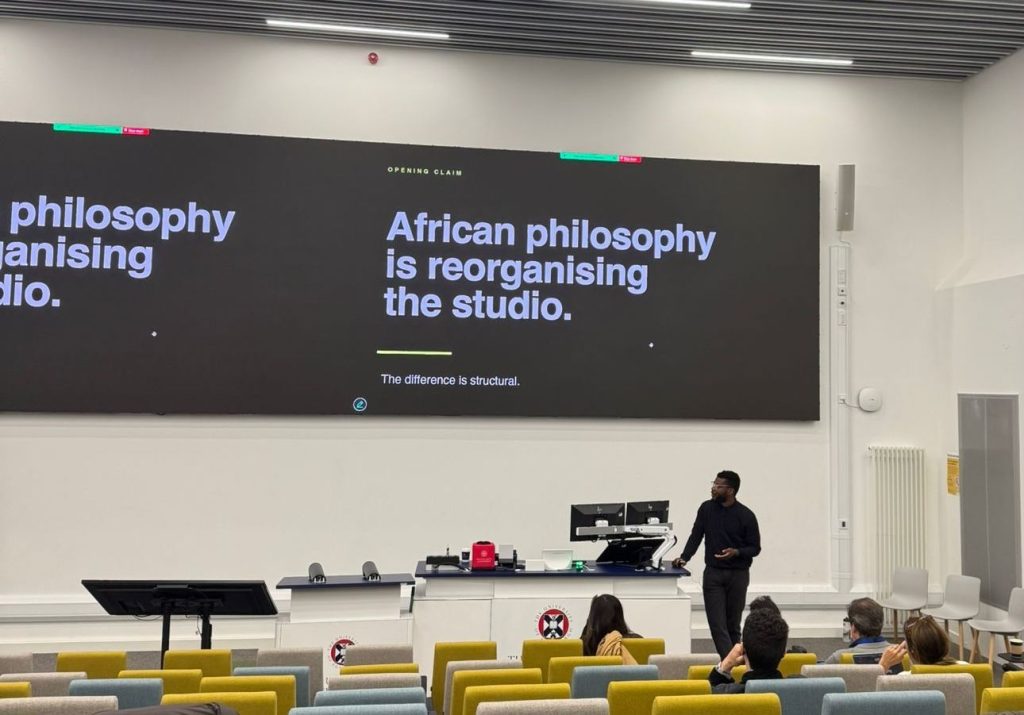
DRS 2026 summary and list of RMIT papers
I’ve been fortunate to be at DRS 2026 in Edinburgh this week, about to catch a train and then...
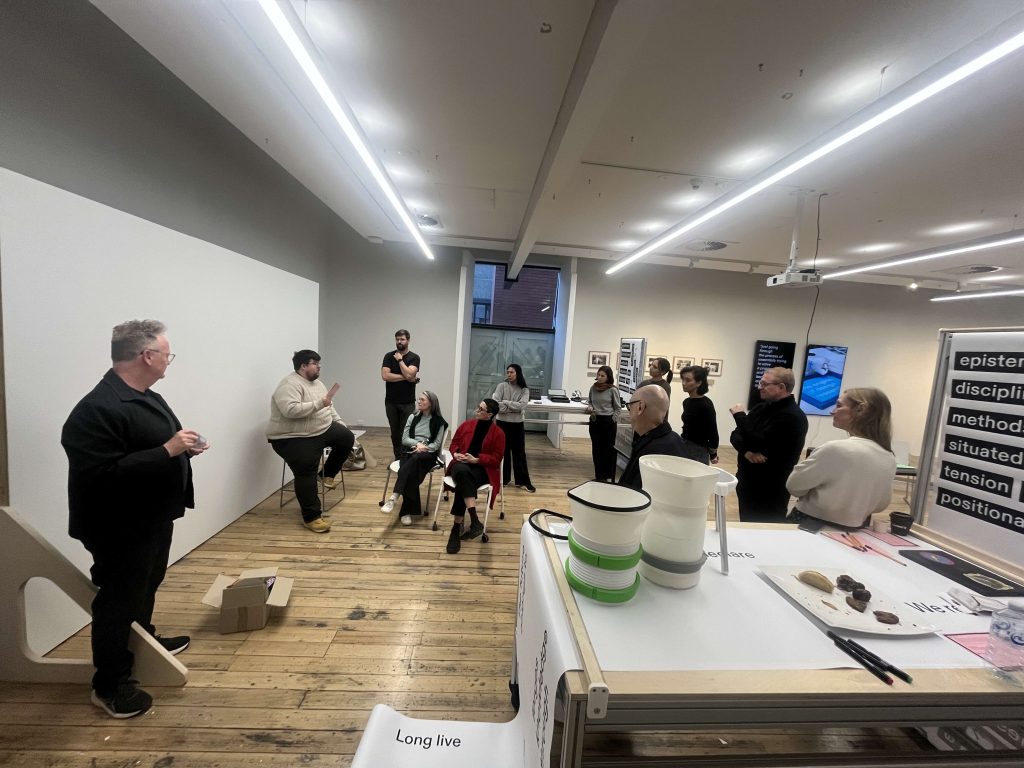
Making Knowledge, Fragmenting Certainty
Friday 22nd, 2026 at Monash, design researchers presented artifacts from their practice—Jon McCormac...
YOU ARE NOT FEEDSTOCK
Last week at The Capitol Melbourne, we launched the RMIT Regenerative Futures Institute. I want to t...
What Doesn’t Need To Be New: Two Launches, One Week, One Paradox
Last week brought two events exploring regenerative futures from very different angles. On one after...

What does it mean for a university to be alive?
The RSA (The royal society for arts, manufactures and commerce), RMIT’s Regenerative Futures I...
Launching RFI…!
Universities are extraordinarily good at adding things. Sustainability offices. Innovation hubs. Int...
What Would It Take to Read the Label?
February’s Futures Collider at RFI put three provocations in a room and asked people to act ou...
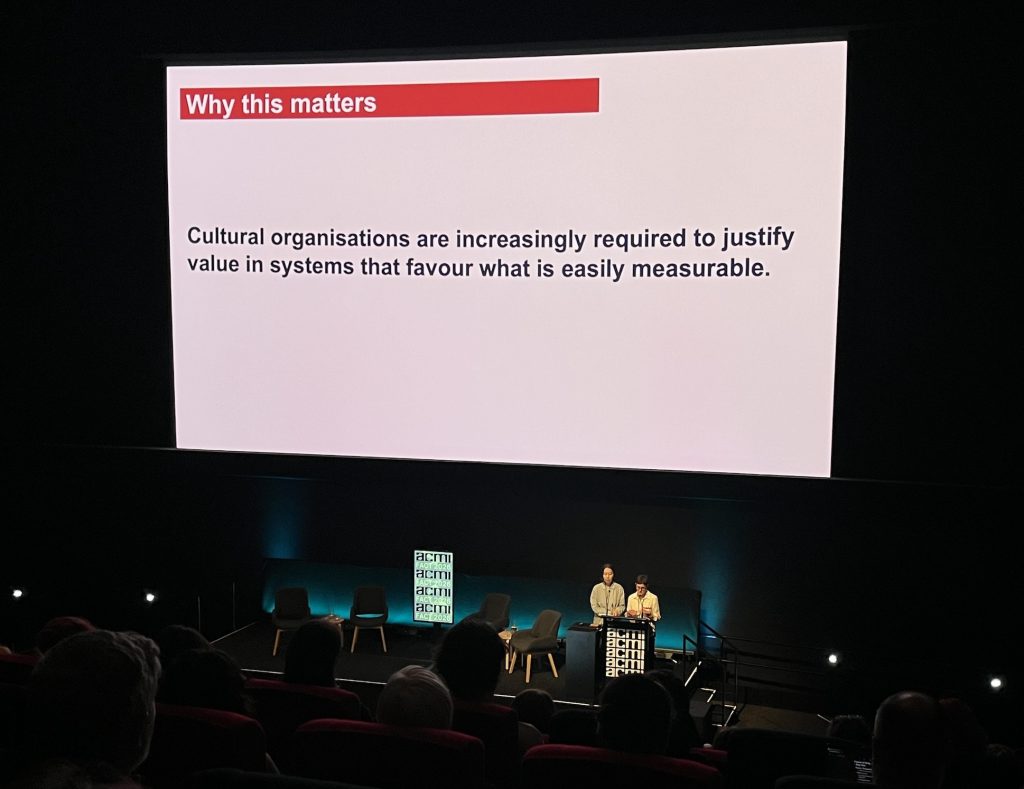
What Gets Counted When Institutions Choose Speed
Two Sessions at FACT 2026 Reflections on qualitative knowledge, AI efficiency pressures, and what ge...
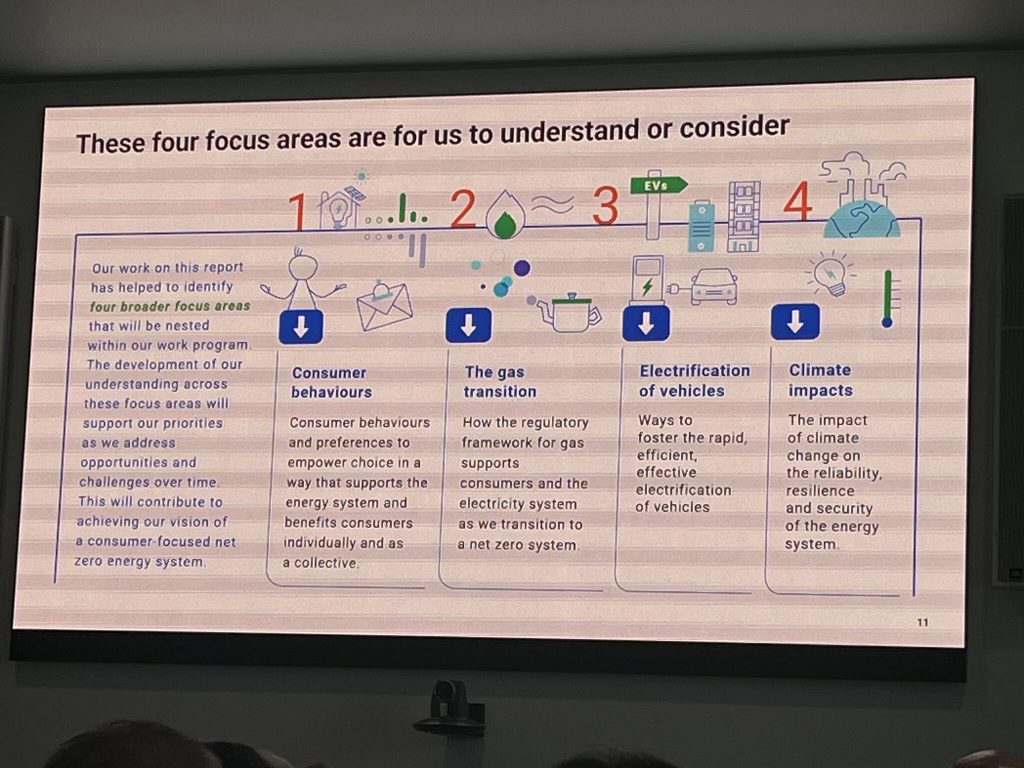
Two Rooms, Two Temporalities
Two events at RMIT over the past couple of weeks revisited the temporal challenges at the heart of h...

Temporal Traps
Ending the year between collapse and care: three December gatherings on time, action, and giving bac...