What Would It Take to Read the Label?
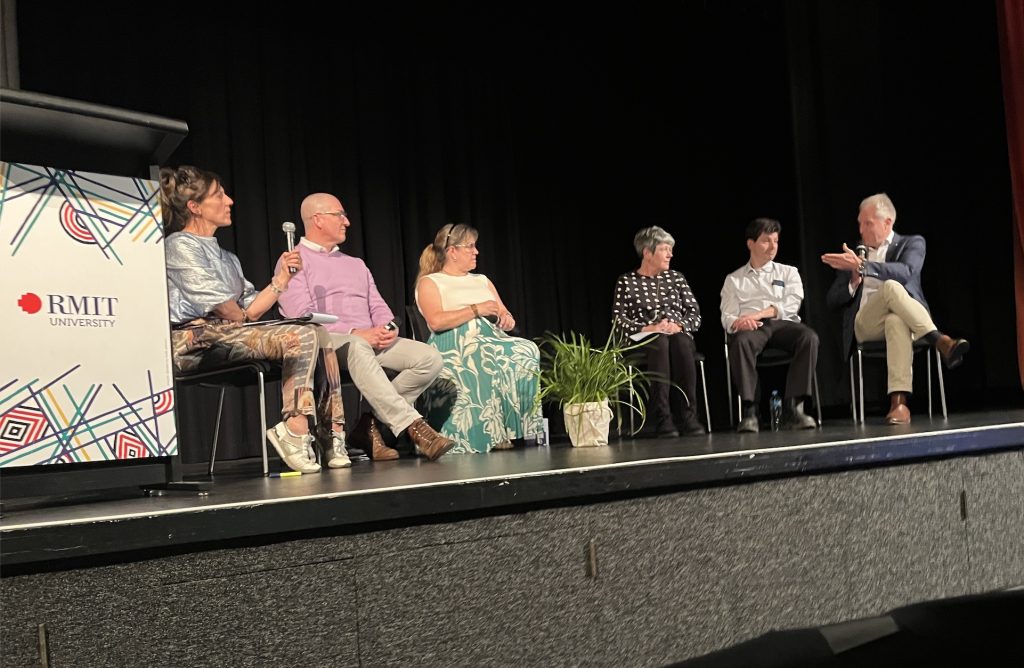
February’s Futures Collider at RFI put three provocations in a room and asked people to act out the consequences. Seven minutes each. Go…
Vanessa Johnston opened from law. AI is dismantling frameworks we’ve spent centuries building: copyright, IP, privacy, because all of them depend on one thing we can no longer reliably do: attribute. Identify an author. Locate a thought. Trace an idea back to a person. AI doesn’t destroy these protections deliberately. It just makes them structurally inoperable.
Tim Fawns followed with a metaphor I haven’t stopped thinking about. AI is a contaminant, already in the reservoir. It’s in the treatment systems. You can try to find fresh water, but it’s homogenising the supply, filtering out flavour, taking out nutrients we can’t fully name. His worry isn’t that we reject it. It’s that we get used to it. That Melbourne water starts tasting fine.
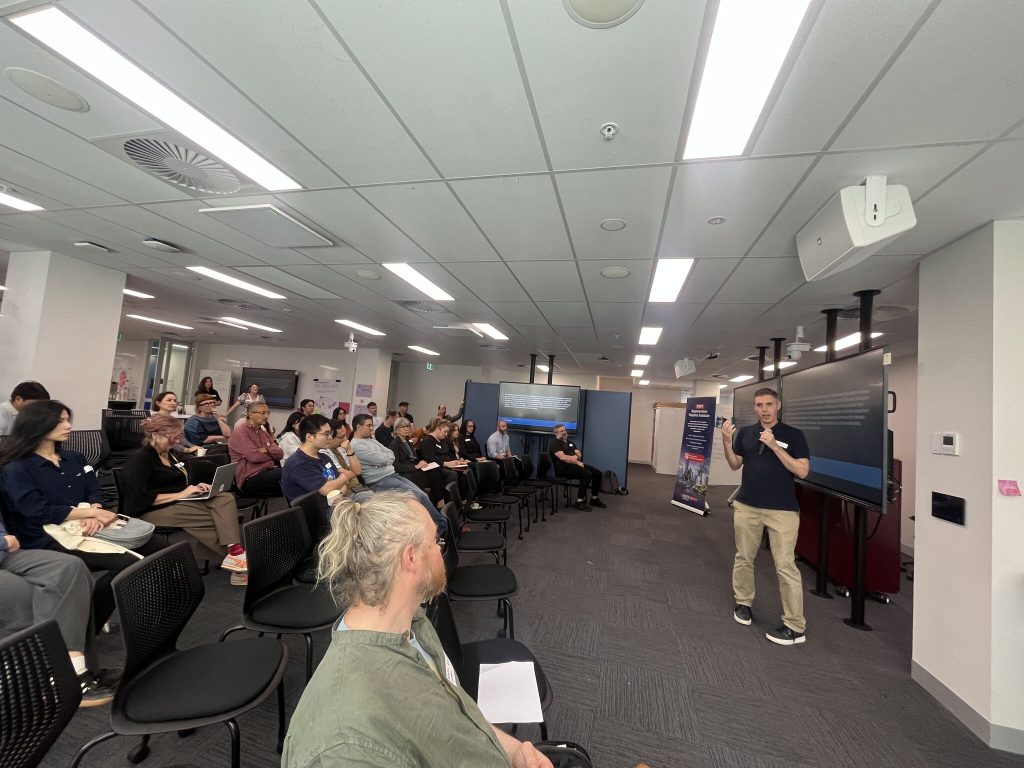
Then Ascelin Gordon made the metaphor uncomfortably material. Those data centres keeping AI running use actual water, enormous, often unsustainably sourced quantities of it for cooling. Plus energy. Plus e-waste cycling every five to seven years. And the impact is almost impossible to calculate: we don’t know which data centre we’re hitting, where it sits, how it’s powered, or what the local aquifer can bear.
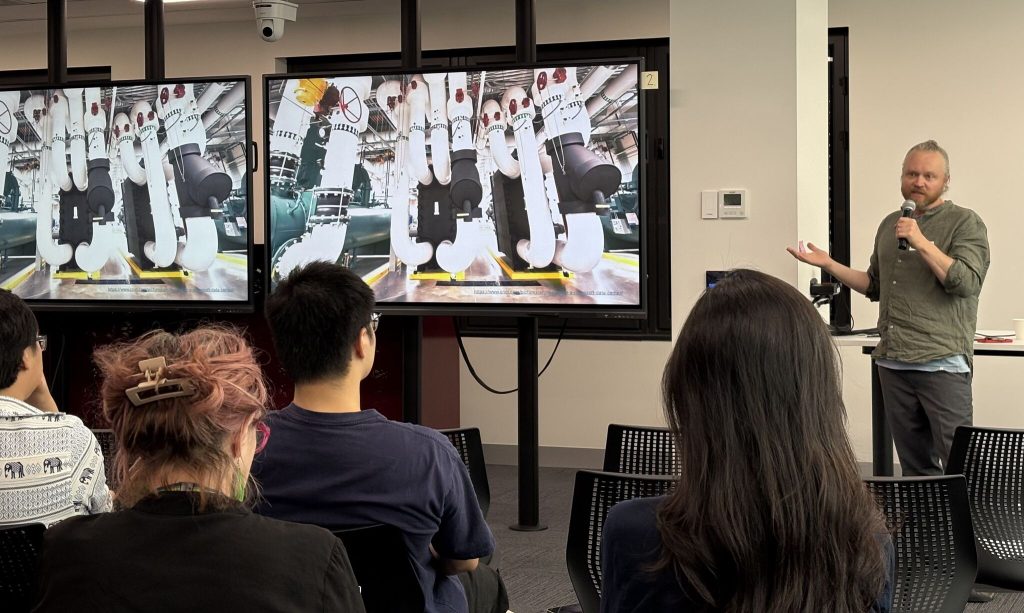
Three speakers. Three registers. One thread: the cost is real, but it’s been made illegible. We can’t attribute the thought. We can’t taste what’s been filtered out. We can’t read the energy label on our query.
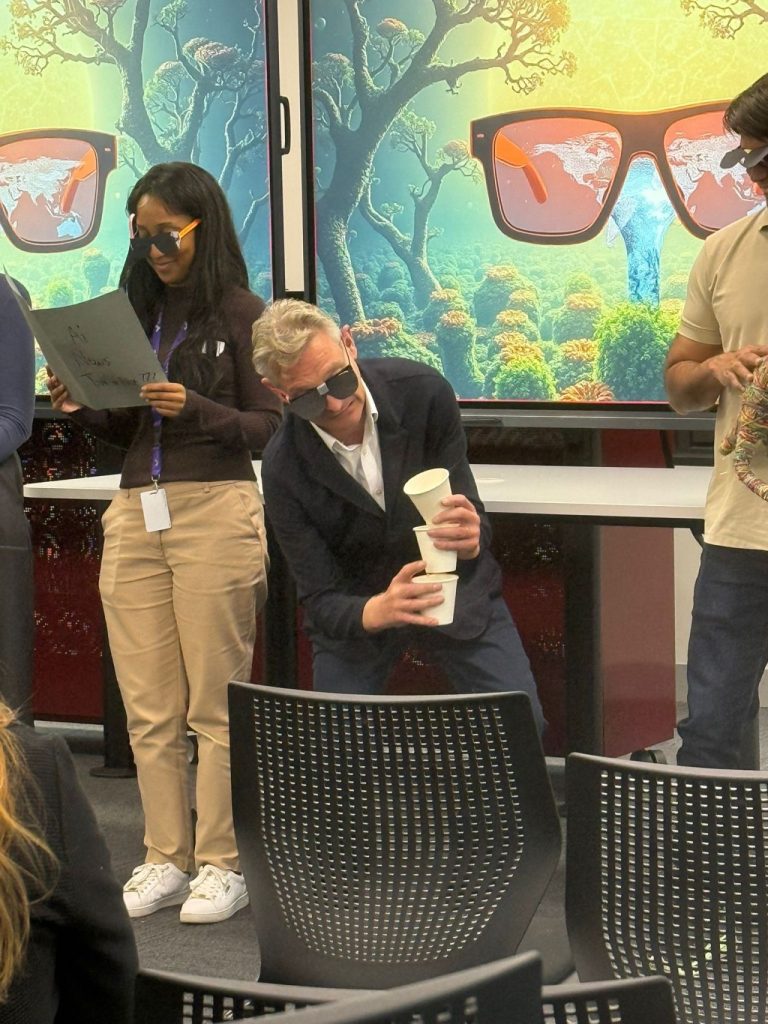
The challenge I put to the room: imagine RFI in 2035, looking back. Did we default to convenience? What did we resist on principle? Groups of RMIT staff, students and members of the public had 45 minutes, then performed their answers, on their feet, two minutes, no posters – only props. It was genuinely brilliant. We had four people walk out – “I’m not doing a skit”!
But here’s the question I’m sitting with: if the cost of AI – legal, cognitive, environmental – is structurally designed to stay invisible, what would it actually take to make it legible? And who has an interest in that never happening?
Thanks to Kirsten Black Hannah Bornsztejn (she/her) Tiobstia Alemu Dale Leszczynski Toni Jones Alan Hill Diane Brown Nicholas Mau
hashtag#RegenerativeFutures hashtag#FuturesCollider hashtag#AIethics hashtag#DesignEducation hashtag#RMIT
Related posts
Small enough to knock on the door
You’ll have to put up with as few too many posts from me during the Energy Futures season for RMIT R...
The Model Is the Problem, Not the Technology
A Speedy report back on last nights opening RMIT Regenerative Futures Institute Explainer event that...
Cooperation, or the Lack of It
Two events I attended recently, on the surface, have almost nothing in common — one was an exhibitio...

Staying in the Aporia
Augustine, writing to God in Book XI of the Confessions, admits he doesn’t know what time is....
Pirate DRS 2026
Thank you to all the speakers who survived the onslaught of “walk the plank”, “pir...
Data Otherwise
Data Otherwise: More-than-Human Data Practices at DRS 2026 What if the problem with data isn’t...
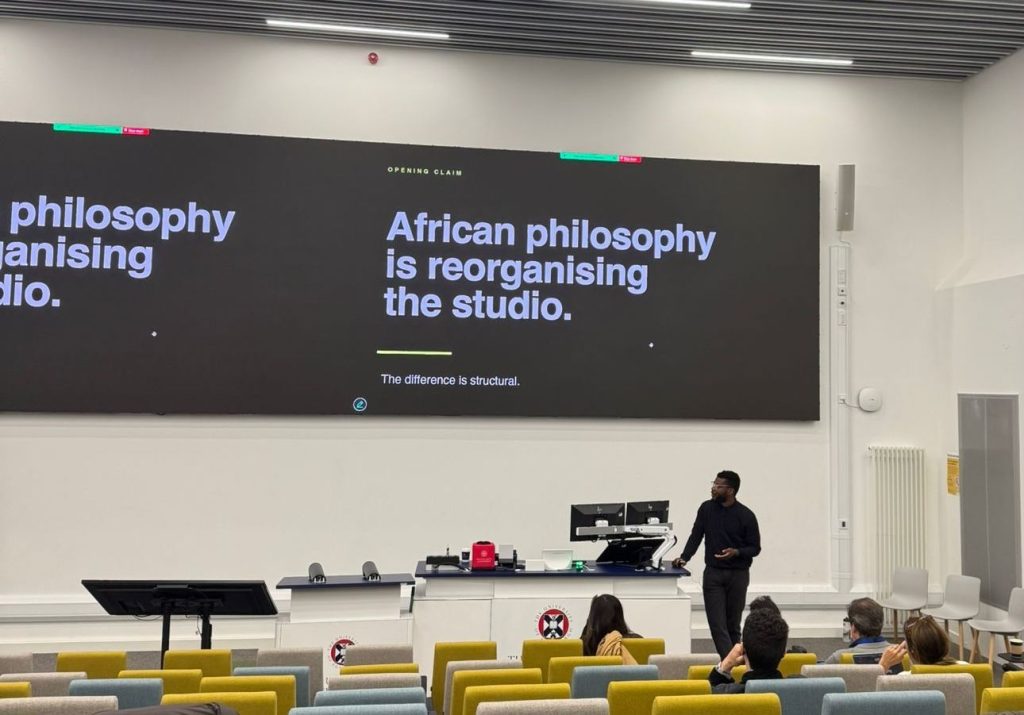
DRS 2026 summary and list of RMIT papers
I’ve been fortunate to be at DRS 2026 in Edinburgh this week, about to catch a train and then...
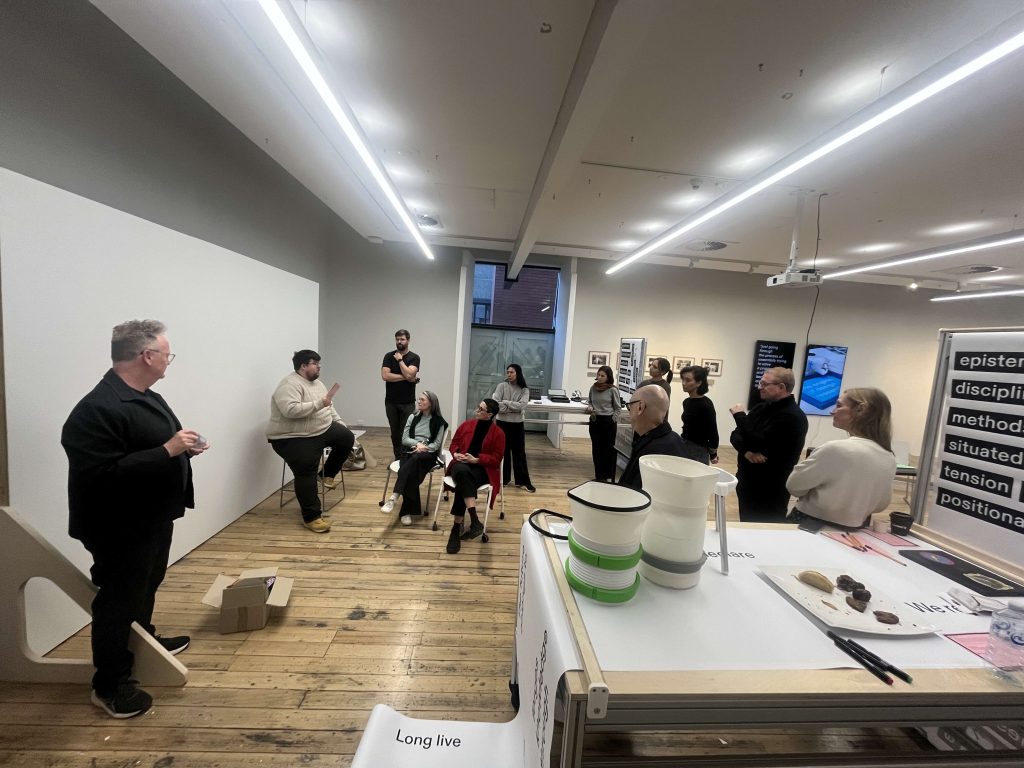
Making Knowledge, Fragmenting Certainty
Friday 22nd, 2026 at Monash, design researchers presented artifacts from their practice—Jon McCormac...
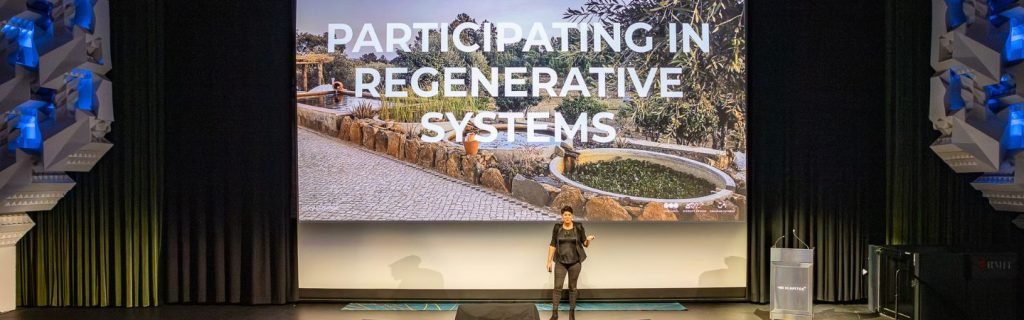
YOU ARE NOT FEEDSTOCK
Last week at The Capitol Melbourne, we launched the RMIT Regenerative Futures Institute. I want to t...
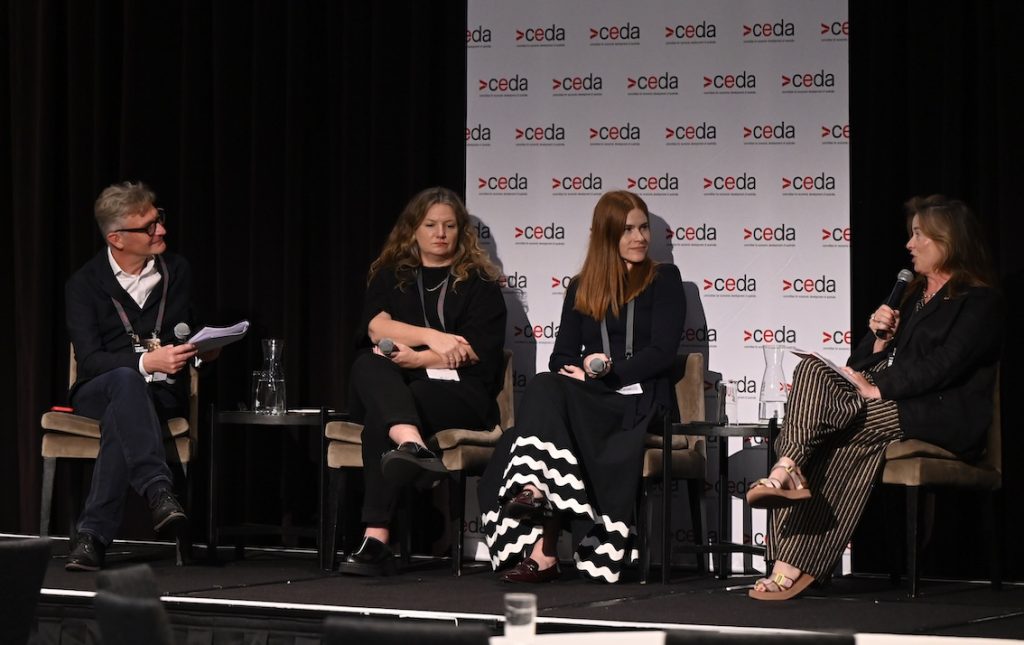
What Doesn’t Need To Be New: Two Launches, One Week, One Paradox
Last week brought two events exploring regenerative futures from very different angles. On one after...

What does it mean for a university to be alive?
The RSA (The royal society for arts, manufactures and commerce), RMIT’s Regenerative Futures I...
Launching RFI…!
Universities are extraordinarily good at adding things. Sustainability offices. Innovation hubs. Int...
Three provocations on designing futures worth watching / reflecting…
Over recent weeks, we’ve been hosting talks from visitors who come through Melbourne. Always fun to...
What Gets Counted When Institutions Choose Speed
Two Sessions at FACT 2026 Reflections on qualitative knowledge, AI efficiency pressures, and what ge...
Two Rooms, Two Temporalities
Two events at RMIT over the past couple of weeks revisited the temporal challenges at the heart of h...

Temporal Traps
Ending the year between collapse and care: three December gatherings on time, action, and giving bac...