Temporal Traps
Ending the year between collapse and care: three December gatherings on time, action, and giving back. Three events revealed not just different approaches to transformation, but different temporal logics entirely.
Indy Johar at RMIT University Capitol Theatre spoke about redesigning civic infrastructure through care and community enterprise. Dark Matter Labs operates on institutional timescales – systemic transformation through social innovation reimagining collective resources and governance.


A walk with Dr Dominique Hes through the Newport Lakes revealed transformation over a 30 year period. Located in the residential area of Newport is the most extraordinary regenerated quarry. Once Koort Boork Boork to the Yallukit-willam people, this land became bluestone quarry, then battleground for hyper local fighting over whether it becomes landfill or sanctuary. Refusing romantic narratives, Hes suggests that “it will never return to the Koort Boork Boork of 200 years ago, but is evolving into something just as beloved.”


At CERES, Distinguished Professor Yin Paradies opened with different temporality: “Our ancestors were and always will be wiser than us.” Not past tense – present continuous. His advice? “Collapse early and avoid the rush, or collapse late and suffer.” Not nihilism but honest accounting across deep time. Associate Professor Vicki Couzens: “Language is land. They are inseparable.” But Australia has “fastest attrition rate” of languages globally. Later on, chaired by David Rousell, Erin Manning and Brian Massumi’s 3Ecologies project is attempting to “give land back to itself” by purchasing land and removing from property markets – creating commons outside capitalist time.

The Temporal Trap:
These aren’t just different approaches – they’re incompatible relationships to time. Institutional redesign requires engaging with established modern business models. Ecological regeneration unfolds across lifetimes, requiring sustained action within colonial property frameworks. Indigenous knowledge refuses this temporal logic – operating across tens of thousands of years while facing the challenge of engaging with institutions that won’t exist in decades.
A year into co-designing the Regenerative Futures Institute and we’re uncovering these intractable, temporal complications, but each of these encounters are helping to improve my expectation for staying with the trouble of time.
RMIT College of Design and Social Context Wendy Steele Tim Marshall hashtag#RegenerativeDesign hashtag#IndigenousKnowledge hashtag#LandBack hashtag#TemporalSovereignty hashtag#Melbourne
Related posts
Cooperation, or the Lack of It
Two events I attended recently, on the surface, have almost nothing in common — one was an exhibitio...

Staying in the Aporia
Augustine, writing to God in Book XI of the Confessions, admits he doesn’t know what time is....
Pirate DRS 2026
Thank you to all the speakers who survived the onslaught of “walk the plank”, “pir...
Data Otherwise
Data Otherwise: More-than-Human Data Practices at DRS 2026 What if the problem with data isn’t...
DRS 2026 summary and list of RMIT papers
I’ve been fortunate to be at DRS 2026 in Edinburgh this week, about to catch a train and then...
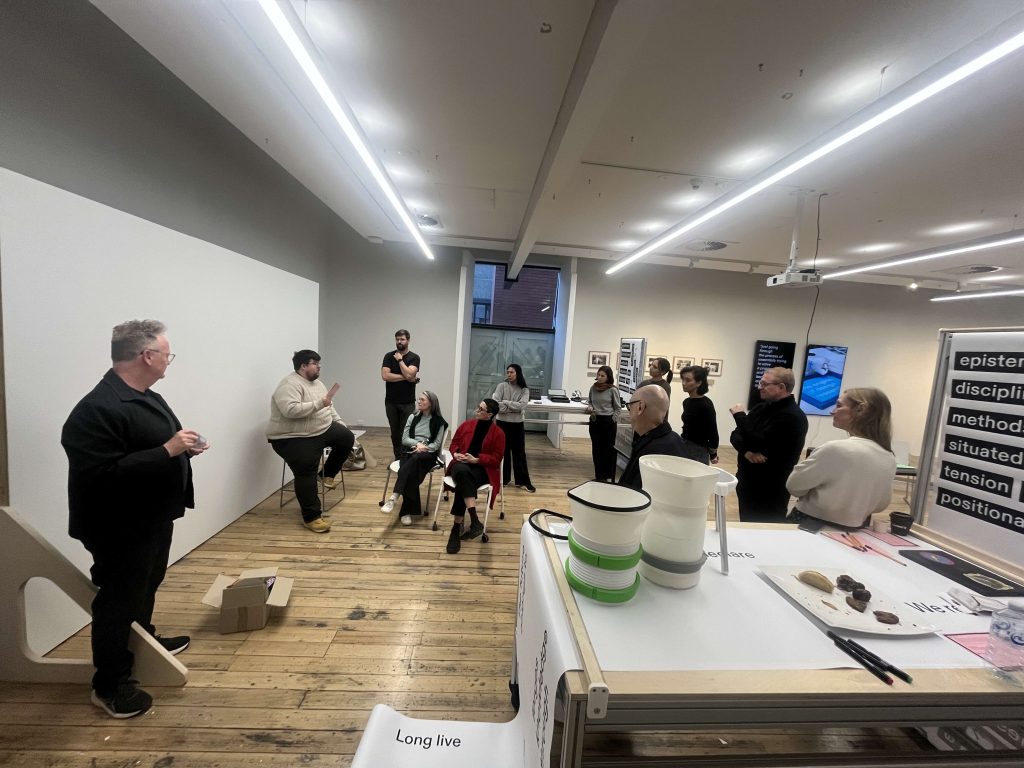
Making Knowledge, Fragmenting Certainty
Friday 22nd, 2026 at Monash, design researchers presented artifacts from their practice—Jon McCormac...
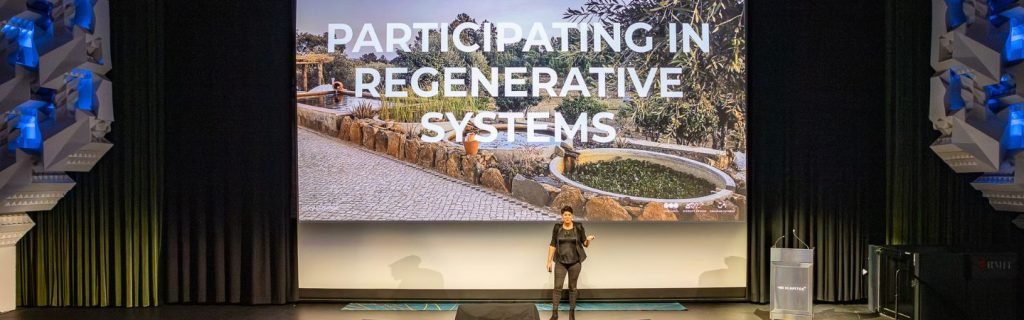
YOU ARE NOT FEEDSTOCK
Last week at The Capitol Melbourne, we launched the RMIT Regenerative Futures Institute. I want to t...
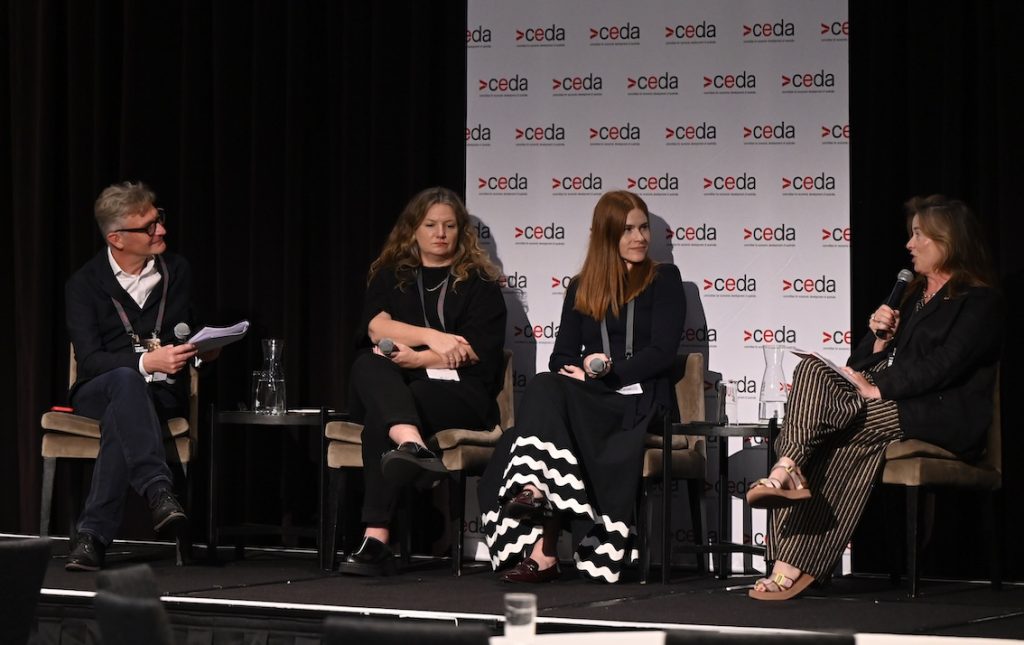
What Doesn’t Need To Be New: Two Launches, One Week, One Paradox
Last week brought two events exploring regenerative futures from very different angles. On one after...

What does it mean for a university to be alive?
The RSA (The royal society for arts, manufactures and commerce), RMIT’s Regenerative Futures I...
Launching RFI…!
Universities are extraordinarily good at adding things. Sustainability offices. Innovation hubs. Int...
Three provocations on designing futures worth watching / reflecting…
Over recent weeks, we’ve been hosting talks from visitors who come through Melbourne. Always fun to...
What Would It Take to Read the Label?
February’s Futures Collider at RFI put three provocations in a room and asked people to act ou...
What Gets Counted When Institutions Choose Speed
Two Sessions at FACT 2026 Reflections on qualitative knowledge, AI efficiency pressures, and what ge...
Two Rooms, Two Temporalities
Two events at RMIT over the past couple of weeks revisited the temporal challenges at the heart of h...

Notes toward the 6th finger
I’ve spent 20 years watching designers optimise products that score well environmentally while...

Rep / Non-Rep & Foreclosure
Catching up with things, and the first of two posts this week, reflecting on events last week. Stayi...