Planetary Pedagogies
Following the launch of PlanetaryCivics two weeks ago, this is the second extension to contributions made to a co-authored paper on Planetary Pedagogies – found here: https://doi.org/10.25439/rmt.28477475.v3
Co-authored with Linda Daley Cathy Greenfield Kelly Hussey-Smith Julian Lee Brigid Magner David Rousell Naomi Stead Wendy Steele Professor Gary Thomas
Bonnie Lester began the provocations which can be found here: https://www.planetarypedagogies.org/
Although many of our voices became intermingled in the paper, my own interest in temporality became the basis for my contribution and explores the critical role of time in how we navigate planetary pedagogies. So, I offer this provocation toward a literacy of
multiple timescapes…
How we conceive time shapes our understanding of planetary challenges. Western education operates in the “mean time” of European modernity—a linear progression underpinning value prescriptions. This fails to account for plural times coexisting on our planet. Indigenous timescapes rupture linear models, returning us to cycles, ancestral connections, and responsibilities beyond human lifetimes. Engaging diverse temporal frameworks shows how education might include multiple ways of knowing.
To navigate our planetary challenges, we need educational frameworks that embrace temporal plurality rather than imposing a single timeline. This means cultivating an ethics that “respects vulnerability, but re-works it affirmatively, while actively constructing social infrastructures of generosity and hope” (Rosi Braidotti). It means supporting ecological reparation within colonised landscapes through appreciation for the slow, transformative forces that regenerate the poly-temporal diversities of life.

Drawing from earlier work with Larissa Pschetz in the 2013 “Time of the Clock and Time of the Encounter” project, we might consider how the rhythms of communities and ecosystems possess temporalities far more complex and differentiated than standardised clock time. Like the Time Bots (see below) that revealed children’s unique temporal patterns when set in motion together, our planetary entanglements reveal a cacophony of diverse timescales—geological, ecological, cultural, and technological—all moving simultaneously according to their own cadences. And it means recognising ourselves as creators of realities whose actions echo through and transform multiple timescales. Time is not simply a neutral backdrop against which education occurs—it is a fundamental material of how we make sense of our entangled existence on this planet, and it deserves our critical attention as we work toward more just and regenerative futures.
Excerpt from the paper…
Becoming Worlds: One or many times
How do we begin to get a sense of the planetary as always more than a single nature or world?
Given the centrality of time to cosmological accounts of worldmaking and complexity, the question of temporality is key to how a planetary pedagogy might be navigated. Although designed for the purposes of knowledge production and preservation (however problematic), the contract of learning within the Western University was founded on the ‘mean time’ of European modernity as the guarantee for certain prescriptions of value. Recent work in the environmental humanities has brought to bear the challenges that temporal models have upon distinctions between natural and human-made systems1, while critical educational researchers have emphasised the radical impact of temporal frames on how problems are comprehended and addressed across scales2, 3. This includes framings of deep cosmological and biological time, such as long-term geological and evolutionary processes, as well as anthropogenic time, which involves historical, cultural, and societal perspectives that shape time according to particular onto-political investments4.
Thinking with a pluriversal frame has a way of multiplying and diffracting time. It incites us to explore the mutual enfolding of time and place by learning from Indigenous timescapes that rupture linear models of temporality5.
Imagining the timescapes of other species offers an important pedagogical opportunity. Bastian argues that the Euro-Western separation of human concepts and measurements of time from the temporalities of nonhuman creatures has produced a fatal sense of confusion around action on climate change. He describes the endangered Leatherback turtle as an ecological clock with 100 million years of evolutionary history which is now registering the sudden and drastic temporal effects of a hyper-carbon-based economy. “Turtles not only tell us about the unstable time of an active Earth, they also tell the frustratingly slow time of human efforts to respond to recognised environmental threats”.
To recognise and learn from multispecies timescapes can encourage ‘active and unfinished learners and makers of worlds’ . This holds the potential for radically diversified and hybridised forms of planetary citizenship and environmental custodianship which recognises responsibilities between past, present, and future generations. The exploration of interconnectedness across different temporal scales, a planetary pedagogy and curricula could support ecological reparation within colonised landscapes through a critical appreciation for the slow, transformative forces that restore and regenerate the poly-temporal diversities of life.
‘At the heart of this political project lays an ethics that respects vulnerability, but re-works it affirmatively, while actively constructing social infrastructures of generosity and hope’6.
[1] Bastian, M., & Facer, K. (2023). Introduction: Teaching time. Time & Society, 32(3), 239-246.
[2] Cole, D. R. (2024). What happens next? Working the time dimension of educational research. In Educational Research and the Question (s) of Time (pp. 19-38). Springer Nature Singapore.
[3] Facer, K. (2019). Storytelling in troubled times: what is the role for educators in the deep crises of the 21st century? Literacy, 53(1), 3-13.
[4] Bawaka Country, including Wright, S., S. Suchet-Pearson, K. Lloyd, L. Burarrwanga, R. Ganambarr, M. GanambarrStubbs, B. Ganambarr, and D. Maymuru. (2015). Working with and Learning from Country: Decentring Human Authority. Cultural Geographies 22 (2), 269–283.
[5] Bastian, M. (2012). Fatally Confused: Telling the Time in the Midst of Ecological Crises. Environmental Philosophy, 9 (1), 23-48.
[6] Amsler, S. & Facer, K. (2017). Contesting anticipatory regimes in education: exploring alternative educational orientations to the future. Futures, Volume 94, 6-14.
[7] Braidotti, R. (2013). Becoming-world. In R. Braidotti, P. Hanafin, & B. B. Blaagaard (Eds.), After cosmopolitanism (pp. 8-27). Routledge.
Related posts
The Model Is the Problem, Not the Technology
A Speedy report back on last nights opening RMIT Regenerative Futures Institute Explainer event that...
Cooperation, or the Lack of It
Two events I attended recently, on the surface, have almost nothing in common — one was an exhibitio...

Staying in the Aporia
Augustine, writing to God in Book XI of the Confessions, admits he doesn’t know what time is....
Pirate DRS 2026
Thank you to all the speakers who survived the onslaught of “walk the plank”, “pir...
Data Otherwise
Data Otherwise: More-than-Human Data Practices at DRS 2026 What if the problem with data isn’t...
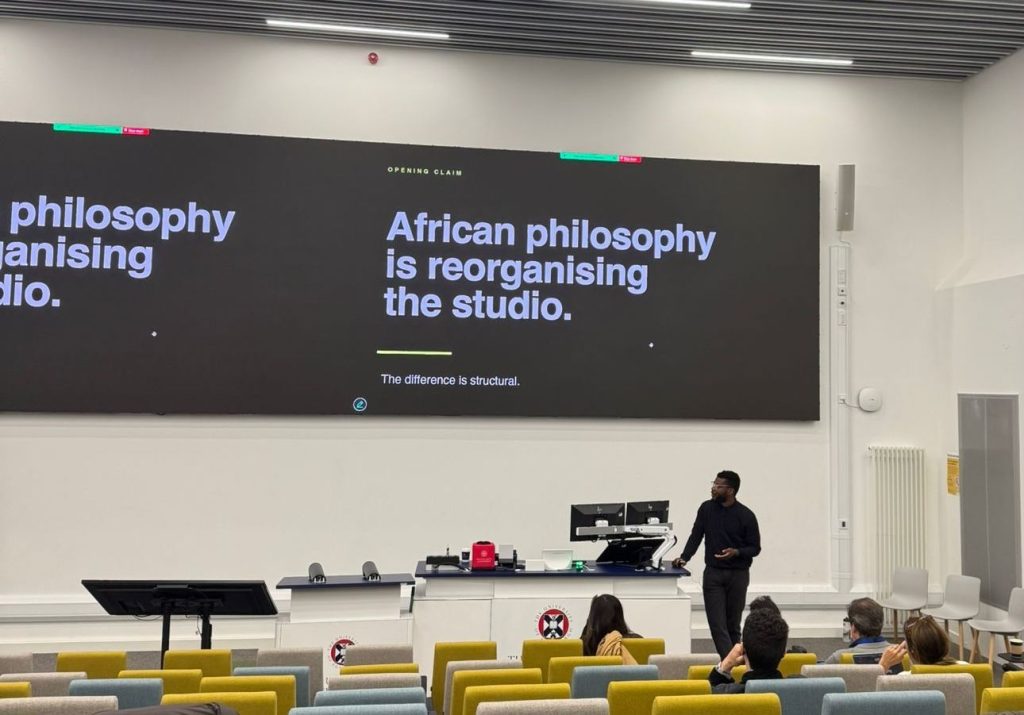
DRS 2026 summary and list of RMIT papers
I’ve been fortunate to be at DRS 2026 in Edinburgh this week, about to catch a train and then...
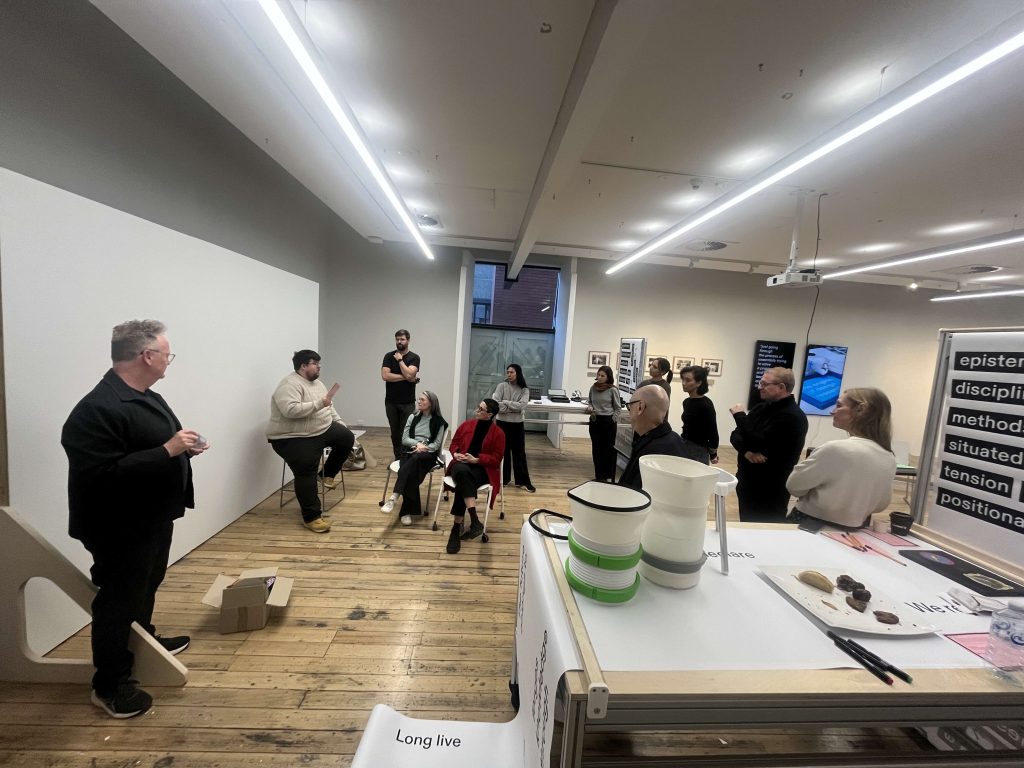
Making Knowledge, Fragmenting Certainty
Friday 22nd, 2026 at Monash, design researchers presented artifacts from their practice—Jon McCormac...
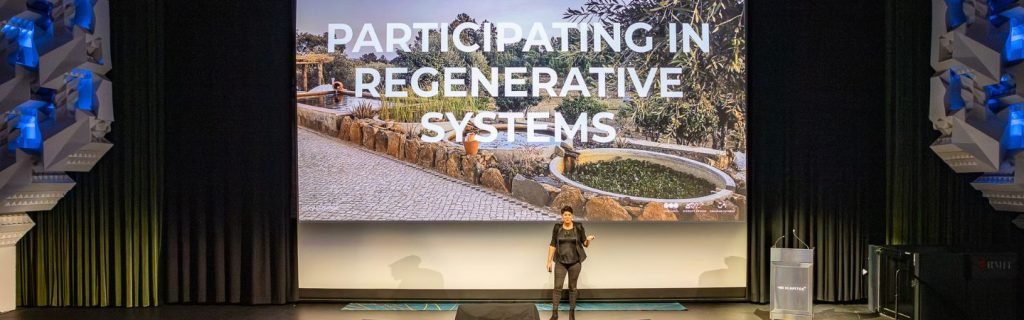
YOU ARE NOT FEEDSTOCK
Last week at The Capitol Melbourne, we launched the RMIT Regenerative Futures Institute. I want to t...
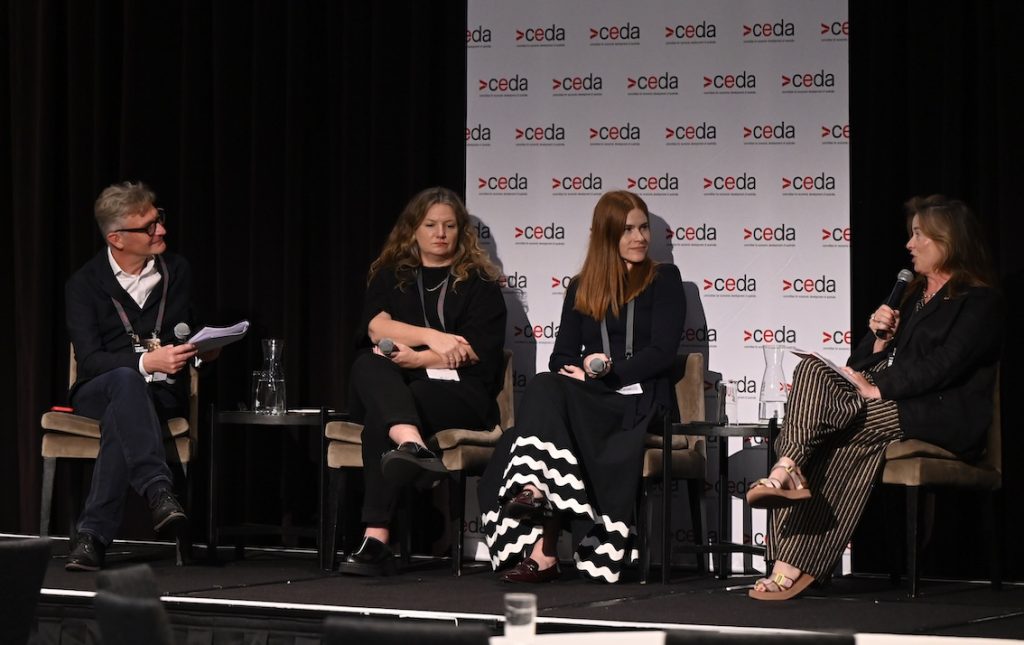
What Doesn’t Need To Be New: Two Launches, One Week, One Paradox
Last week brought two events exploring regenerative futures from very different angles. On one after...
What does it mean for a university to be alive?
The RSA (The royal society for arts, manufactures and commerce), RMIT’s Regenerative Futures I...
Launching RFI…!
Universities are extraordinarily good at adding things. Sustainability offices. Innovation hubs. Int...
Three provocations on designing futures worth watching / reflecting…
Over recent weeks, we’ve been hosting talks from visitors who come through Melbourne. Always fun to...
What Would It Take to Read the Label?
February’s Futures Collider at RFI put three provocations in a room and asked people to act ou...
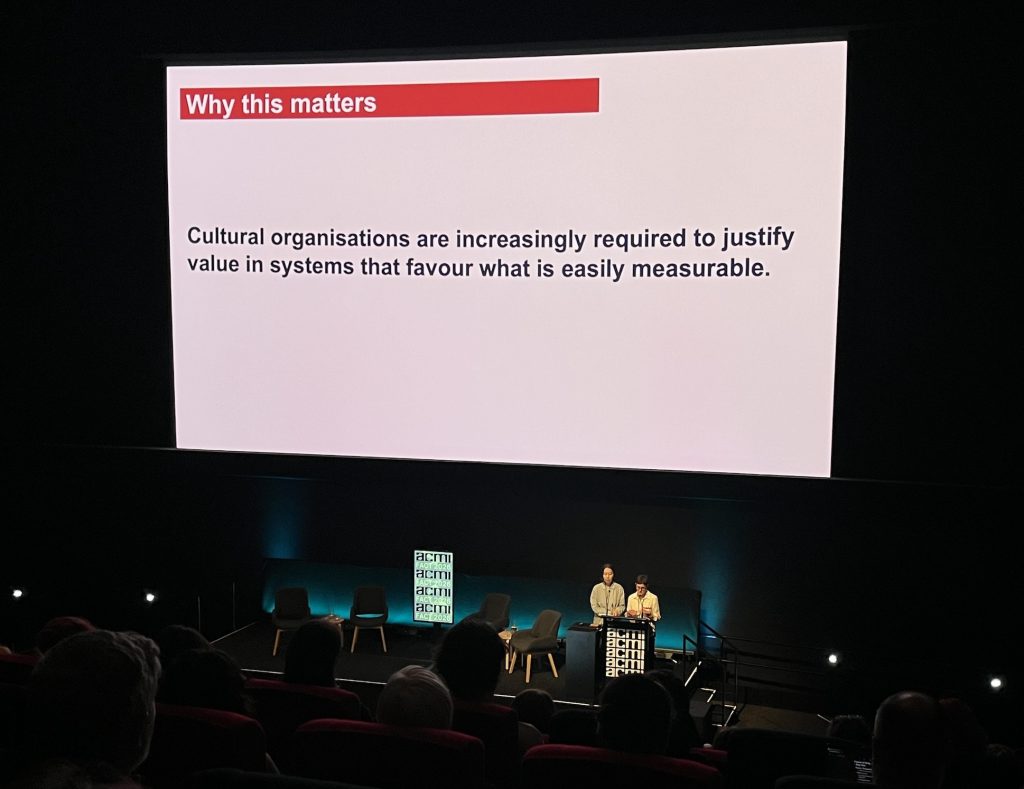
What Gets Counted When Institutions Choose Speed
Two Sessions at FACT 2026 Reflections on qualitative knowledge, AI efficiency pressures, and what ge...
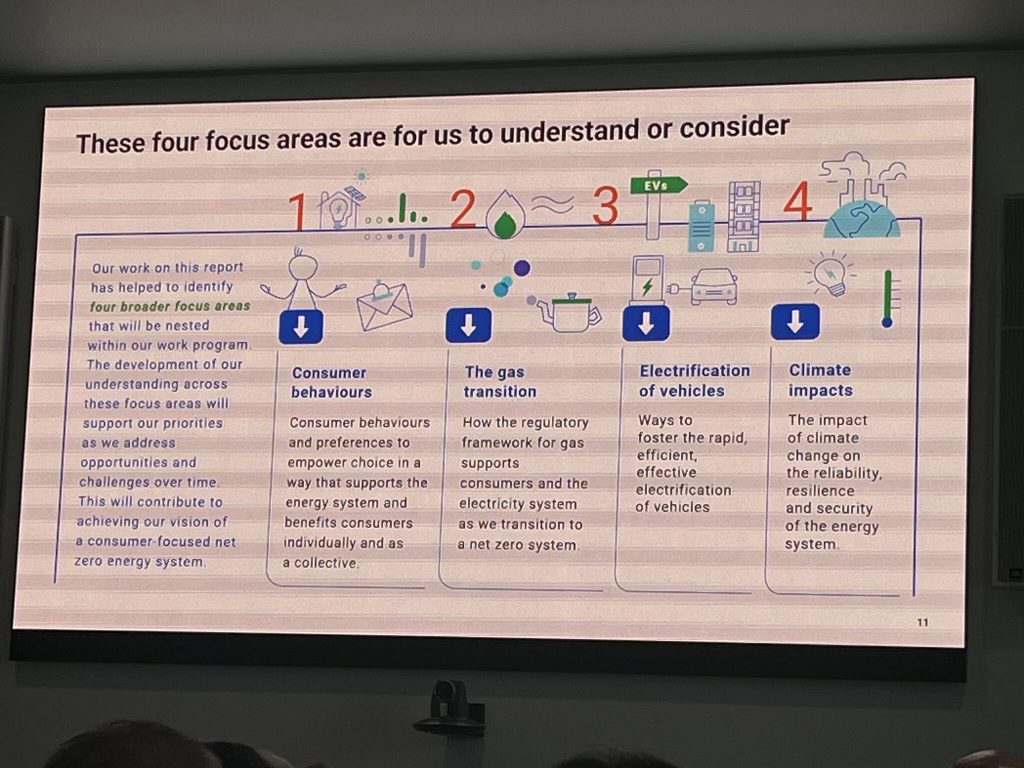
Two Rooms, Two Temporalities
Two events at RMIT over the past couple of weeks revisited the temporal challenges at the heart of h...

Temporal Traps
Ending the year between collapse and care: three December gatherings on time, action, and giving bac...