YOU ARE NOT FEEDSTOCK
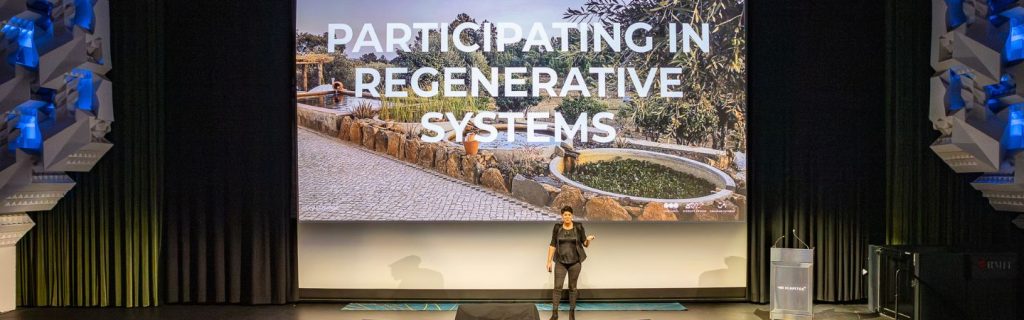
Last week at The Capitol Melbourne, we launched the RMIT Regenerative Futures Institute. I want to try and tell you what actually happened — and why I think it matters beyond the occasion.
I’ll start with something I said toward the end of the evening that I hadn’t quite planned to say so directly.
YOU ARE NOT FEEDSTOCK
Over the last few years, almost every sector I’ve spent time with has been wrestling with the same problem: their supply chains need to change. The raw materials — the feedstock — that go into their products and services are no longer sustainable, and the shift to something better is slow and expensive. Ask Qantas what their plan is for sustainable aviation fuel and you’re looking at a fifteen-year paradigm shift, minimum. That’s the pace of industrial transformation when the system is built around physical supply chains.
But ask a teacher to change what they teach? That happens tonight. Tomorrow morning I walk into a room and I can orient everything I do toward climate, toward justice, toward regenerative practice. There is no supply chain problem when the system is human. Students are not raw materials. Staff are not inputs. We are a collection of people who choose, again and again, to learn and to change — and we can do it faster than any industrial system can.
That’s what RMIT’s Regenerative Futures Institute is built on. Not a new set of resources to be extracted and processed. A community of people willing to do things differently.
What happened on the night
Uncle John Terrick opened the evening with a Welcome to Country, and Djirri Djirri danced. From the beginning, this was framed as a gathering on Country, with obligations that come with that.
RMIT Vice-Chancellor Professor Alec Cameron spoke about why the moment demands something new. “At the very moment when we need deep expertise in electrification, sustainable cities, climate technology, bio-design, circular systems and ethical business models, we remain constrained by traditional mindsets and stubborn disciplinary silos.” His diagnosis was sharp: Australia faces an accelerating demand for regenerative capabilities that no single discipline, or single university, is positioned to meet alone. The RFI is RMIT’s response to that gap — not a boutique add-on, but an institution-wide commitment to horizontal connection.
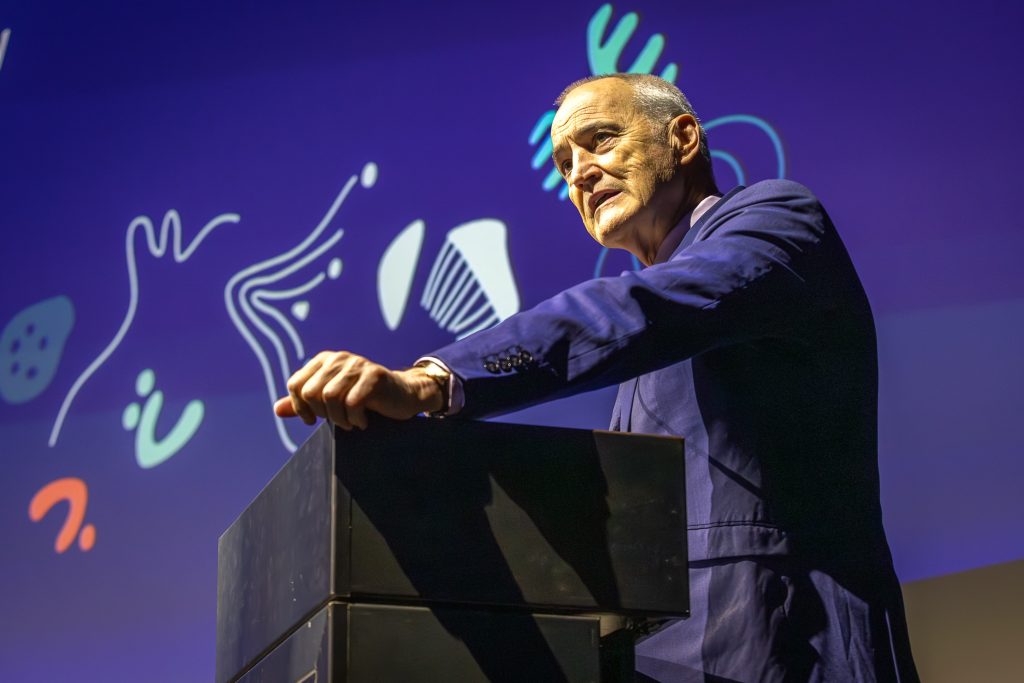
Dr Leyla Acaroglu delivered a keynote that did what the best provocations do: it made the comfortable uncomfortable. “Unless we create a full system solution and work to ensure that we’re not creating tomorrow’s problems with today’s solutions, we are not going to solve these problems.” She challenged the dominant thinking strategies that produced the polycrisis in the first place — and argued, convincingly, that doing more of the same faster is not a strategy.
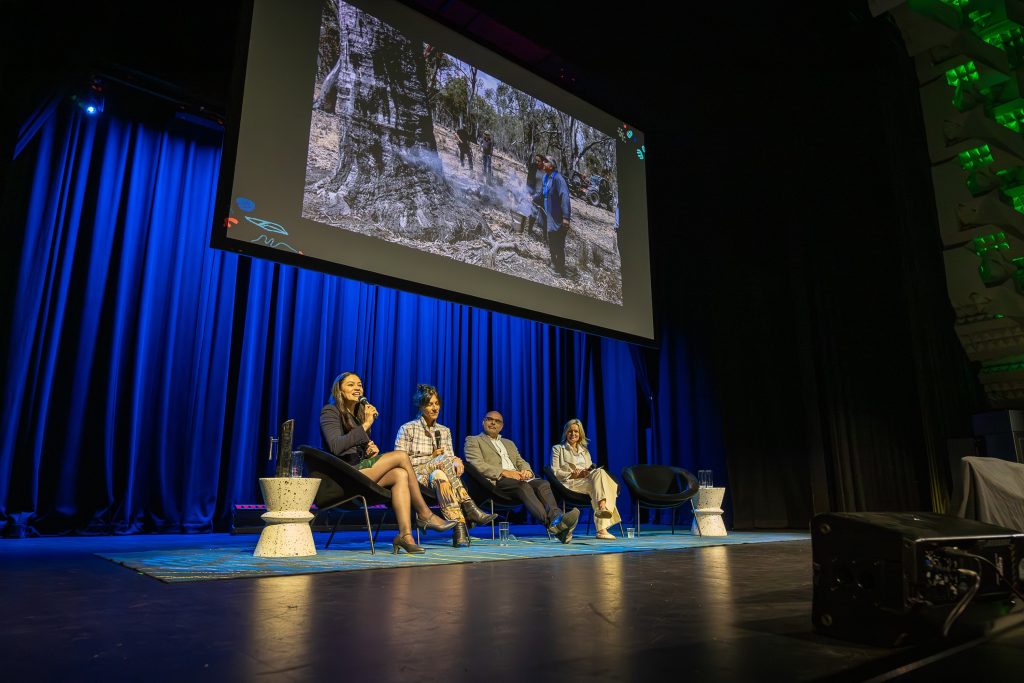
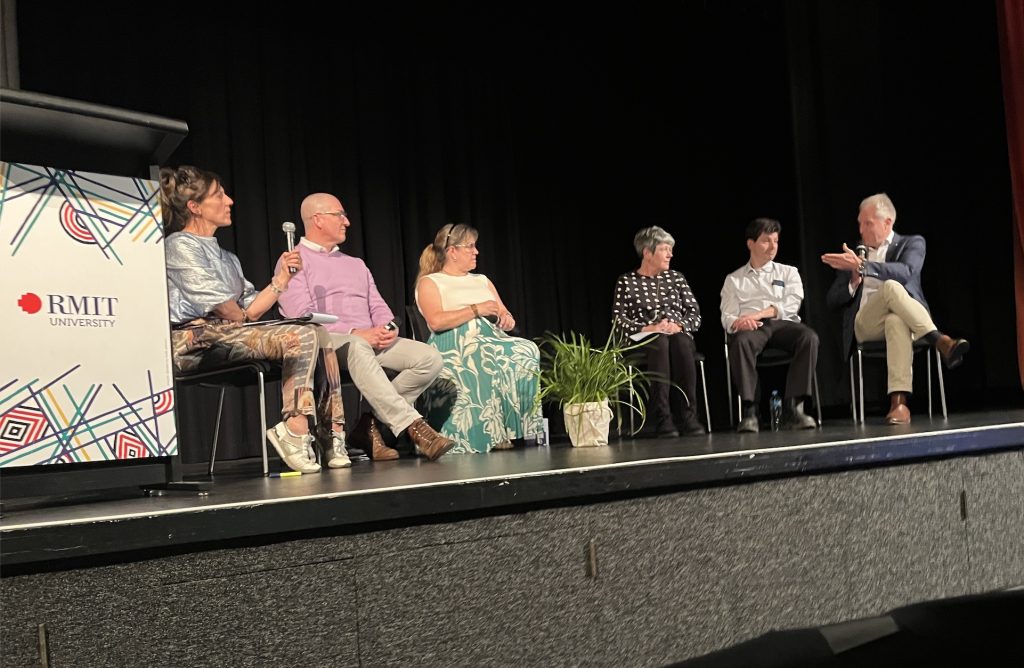
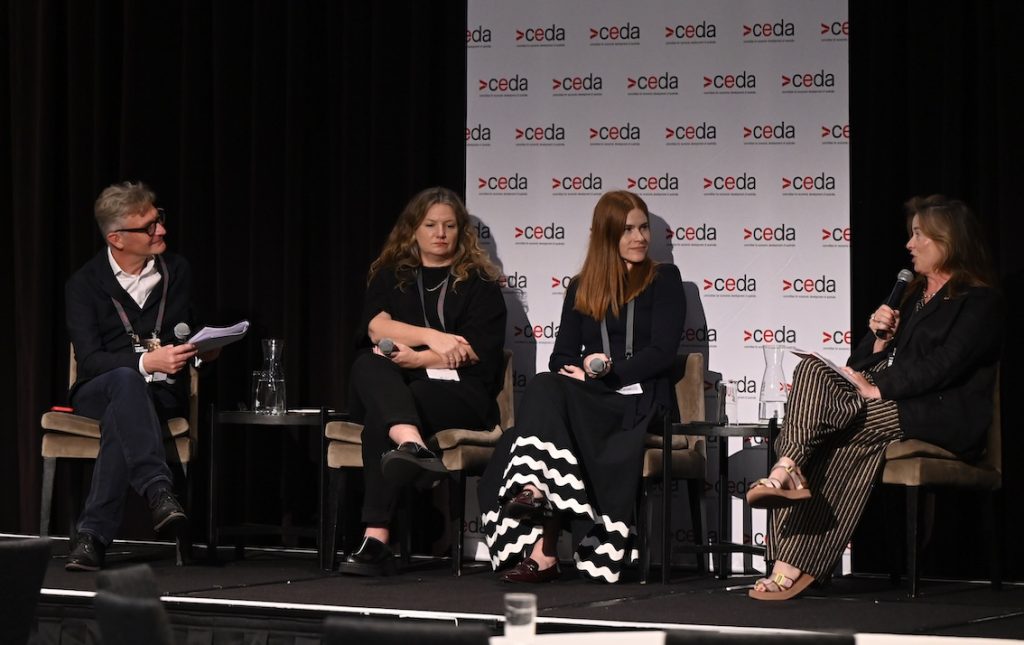
Tanya Ha then led a panel — Tamara DiMattina, Paul Paton, and Hayley Morris — across territory that included community organising, First Nations knowledge systems, and regenerative leadership practice. What struck me most was that the panel didn’t pretend the problems are simple. They were honest about what’s hard. That, I think, is the right note for a beginning.
The bigger picture
A few weeks before the launch I sat in conversation with David Holmgren — co-originator of permaculture — at the NGV, exploring an idea called the Symbiocene. It’s a concept proposed by eco-philosopher Glenn Albrecht: a vision of what comes after the Anthropocene. Where the Anthropocene has been defined by human dominance and the extraction of natural systems, the Symbiocene is its opposite — an era in which human culture, technology and economy are shaped by and in service of the interconnected web of life. As Albrecht puts it: life works with life to further life, so that all can thrive.
Holmgren’s permaculture was always making this argument. Treat the living world not as a resource to be managed but as a teacher to learn from. Don’t design against nature — design with it.
That’s the same argument I was trying to make in the room on Thursday. Feedstock thinking sees inputs. Regenerative thinking sees participants. The question for every institution — every university, every business, every government body — is which of those two logics it actually operates from.
What we’re building
We didn’t launch RFI as a finished thing. We launched it as a beginning — which means the work is the point.
Right now, RFI has more than 35 Fellows drawing on expertise from across RMIT’s Schools and Colleges. We have more than 20 research centres spanning urban futures, nature-positive design, justice, and health. Eight Enabling Impact Platforms connecting work that used to happen in silos. And more than half a million alumni across 150 countries — leaders already inside every sector we’re trying to shift.
We’ve just introduced a suite of short courses for adult learners: AI Ethics for Sustainable Futures, Introduction to Regenerative Fundamentals, and Systems Thinking for Sustainable Futures, with more coming. Expressions of interest are open now.
An interdisciplinary minor in Regenerative Futures is available for undergraduate students across design, business, IT, engineering, international studies and the creative arts. Bachelor of Business student Adam Dawton put it better than I could: “Regenerative Fundamentals has been the most thought-provoking course I have taken during my studies. It has expanded the way I think about business, showing me how regenerative thinking can shape a future focused on restoring communities, relationships, and the natural world.”
Restoring, not extracting. Relationships, not supply chains.
Later in 2026 we’ll launch the Energy Futures event season — bringing industry, government, community and education together not for a symposium, but to work on something together. A postgraduate program and new interdisciplinary research partnerships are in development.
One last thing
After I arrived in Melbourne I came across a book by social scientists asking how research actually gets done. Its answer, which I’ve not been able to shake, was simply this: the relationship is the project.
Not the methods. Not the funding. Not the infrastructure. The relationship.
The recording…
Related posts
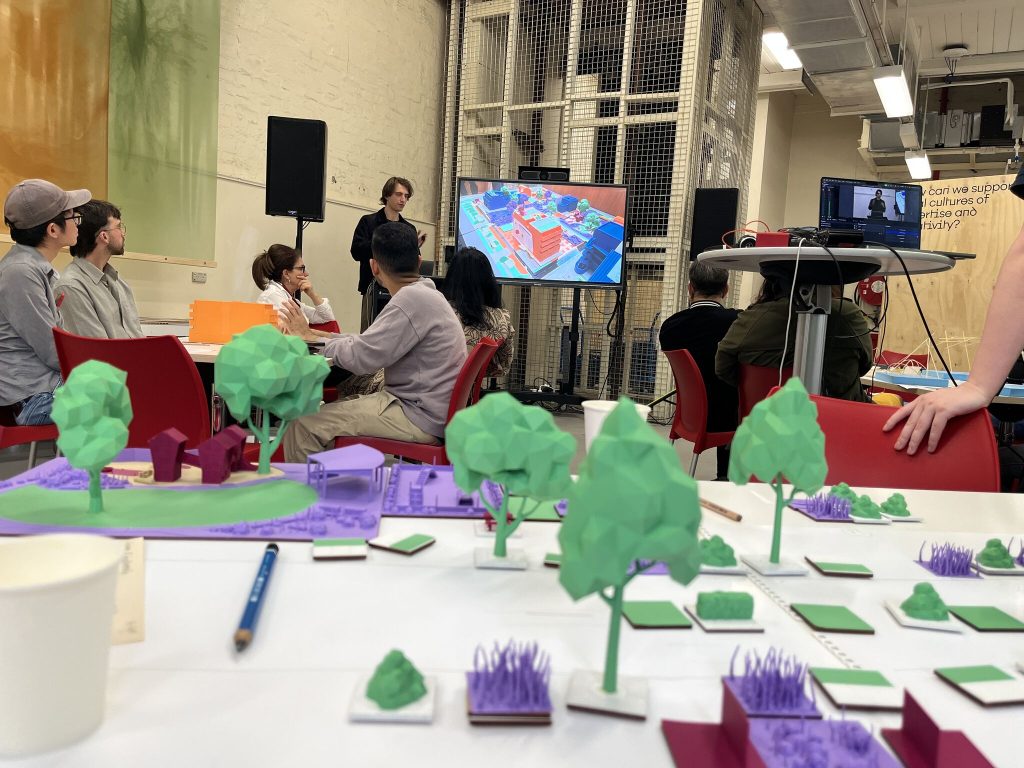
Small enough to knock on the door
You’ll have to put up with as few too many posts from me during the Energy Futures season for RMIT R...
The Model Is the Problem, Not the Technology
A Speedy report back on last nights opening RMIT Regenerative Futures Institute Explainer event that...
Cooperation, or the Lack of It
Two events I attended recently, on the surface, have almost nothing in common — one was an exhibitio...

Staying in the Aporia
Augustine, writing to God in Book XI of the Confessions, admits he doesn’t know what time is....
Pirate DRS 2026
Thank you to all the speakers who survived the onslaught of “walk the plank”, “pir...
Data Otherwise
Data Otherwise: More-than-Human Data Practices at DRS 2026 What if the problem with data isn’t...
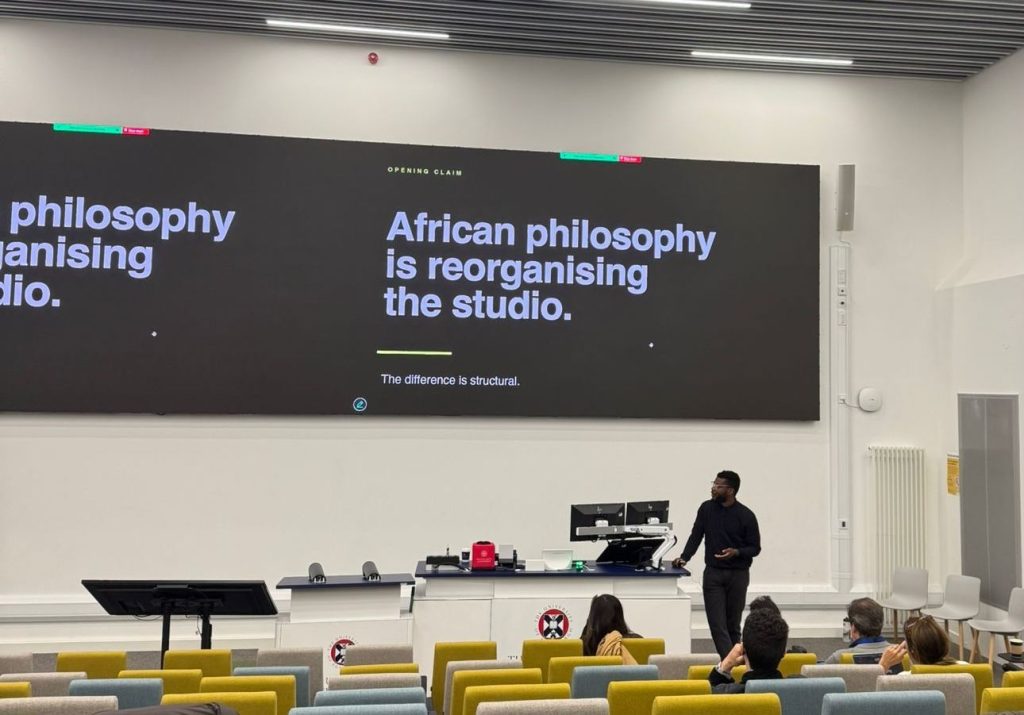
DRS 2026 summary and list of RMIT papers
I’ve been fortunate to be at DRS 2026 in Edinburgh this week, about to catch a train and then...
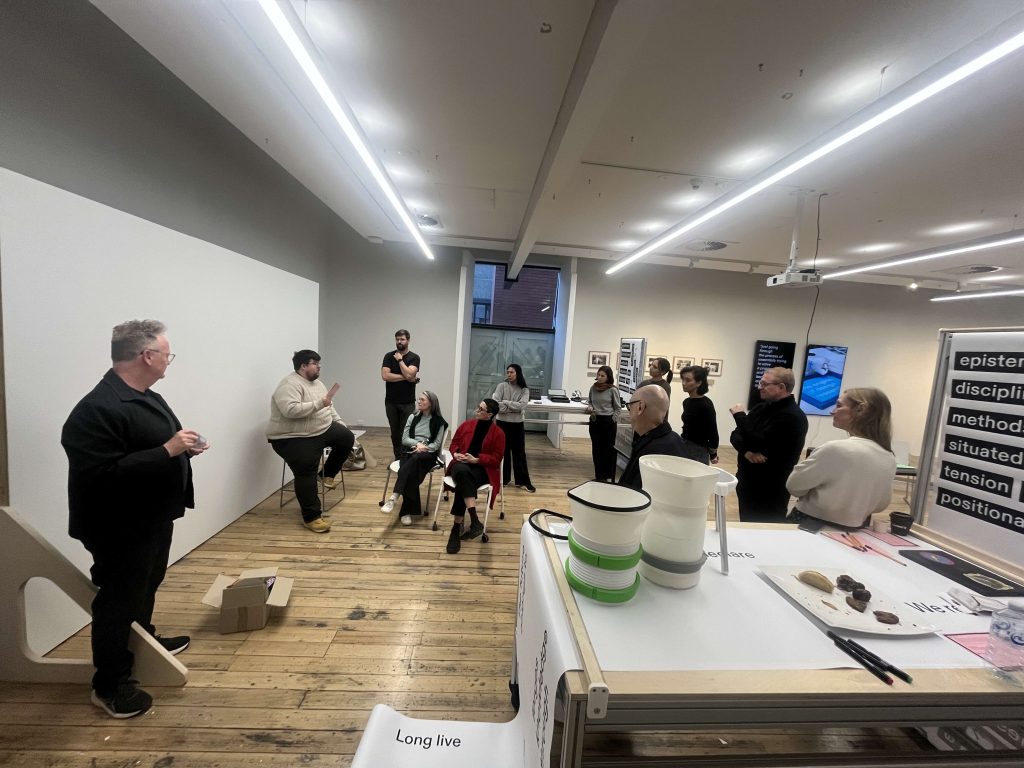
Making Knowledge, Fragmenting Certainty
Friday 22nd, 2026 at Monash, design researchers presented artifacts from their practice—Jon McCormac...
What Doesn’t Need To Be New: Two Launches, One Week, One Paradox
Last week brought two events exploring regenerative futures from very different angles. On one after...

What does it mean for a university to be alive?
The RSA (The royal society for arts, manufactures and commerce), RMIT’s Regenerative Futures I...
Launching RFI…!
Universities are extraordinarily good at adding things. Sustainability offices. Innovation hubs. Int...
Three provocations on designing futures worth watching / reflecting…
Over recent weeks, we’ve been hosting talks from visitors who come through Melbourne. Always fun to...
What Would It Take to Read the Label?
February’s Futures Collider at RFI put three provocations in a room and asked people to act ou...
What Gets Counted When Institutions Choose Speed
Two Sessions at FACT 2026 Reflections on qualitative knowledge, AI efficiency pressures, and what ge...
Two Rooms, Two Temporalities
Two events at RMIT over the past couple of weeks revisited the temporal challenges at the heart of h...

Temporal Traps
Ending the year between collapse and care: three December gatherings on time, action, and giving bac...