Cooperation, or the Lack of It
Two events I attended recently, on the surface, have almost nothing in common — one was an exhibition opening at the NGV, the other a talk about the slow rot of online platforms. But both spent their time describing, in careful detail, what a system actually rewards once you stop assuming good behaviour will simply prevail on its own merits. Put side by side, they make an uncomfortable case: cooperation isn’t a value we’re short of. It’s what any system sustains by default, right up until something is built specifically to reward the opposite.
A cyclical economy that owes no one an explanation
NGV and RMIT’s Plant Life exhibition opens with a premise its curator, Ewan McEoin, states plainly: for most of human history, nearly everything was made from plants, grown rather than synthesised, circular rather than linear. The Industrial Revolution, colonial trade networks, and the rise of synthetic chemistry displaced that relationship across the 19th and 20th centuries, producing a material world increasingly disconnected from biology — cheaper, more uniform, easier to scale, and, in McEoin’s words, carrying consequences to human health and ecosystems that were “either not understood or not fully acknowledged.”
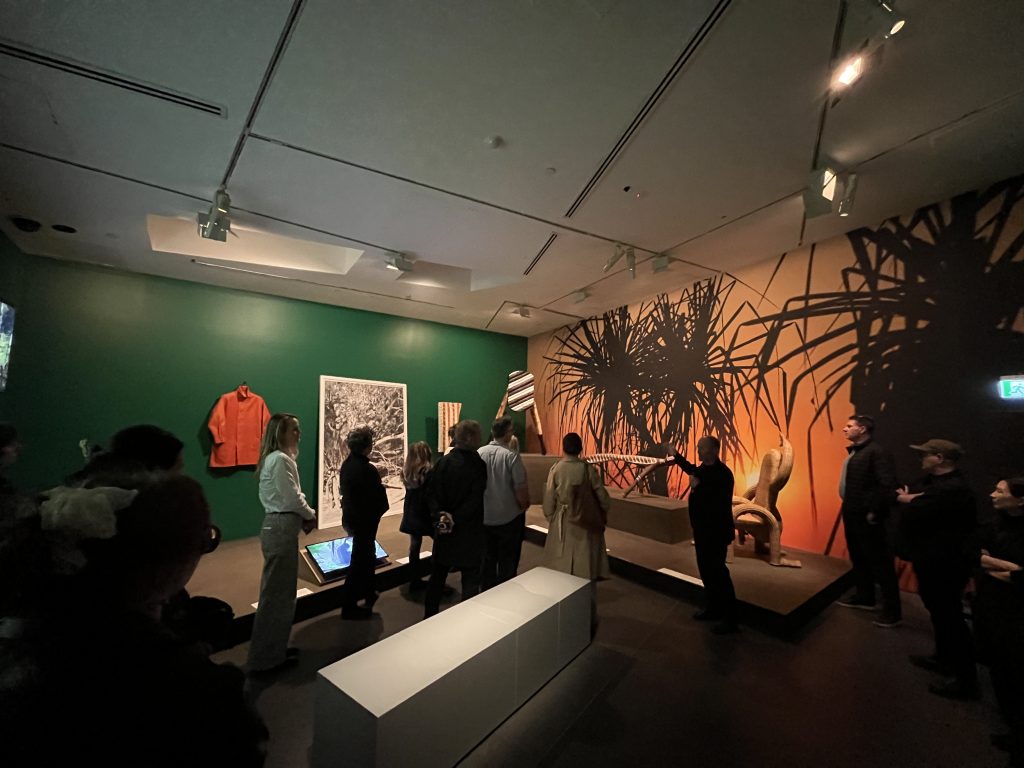
The exhibition is organised into four chapters, and each pushes back against a slightly different version of easy optimism. New Growth covers the leading edge of plant-based material innovation. Planted Cloth sits new commissions alongside the NGV’s historical textile collection, insisting the knowledge involved is ancient rather than newly discovered. Forests and Industry asks the harder, more self-implicating question: if we do shift back toward plants as the dominant material source, where does all that material actually come from, at a scale that could replace petrochemical plastics globally? And Enduring Relationships looks to living knowledge systems that have sustained a reciprocal relationship with plants across millennia, asking what institutions might still learn from them.
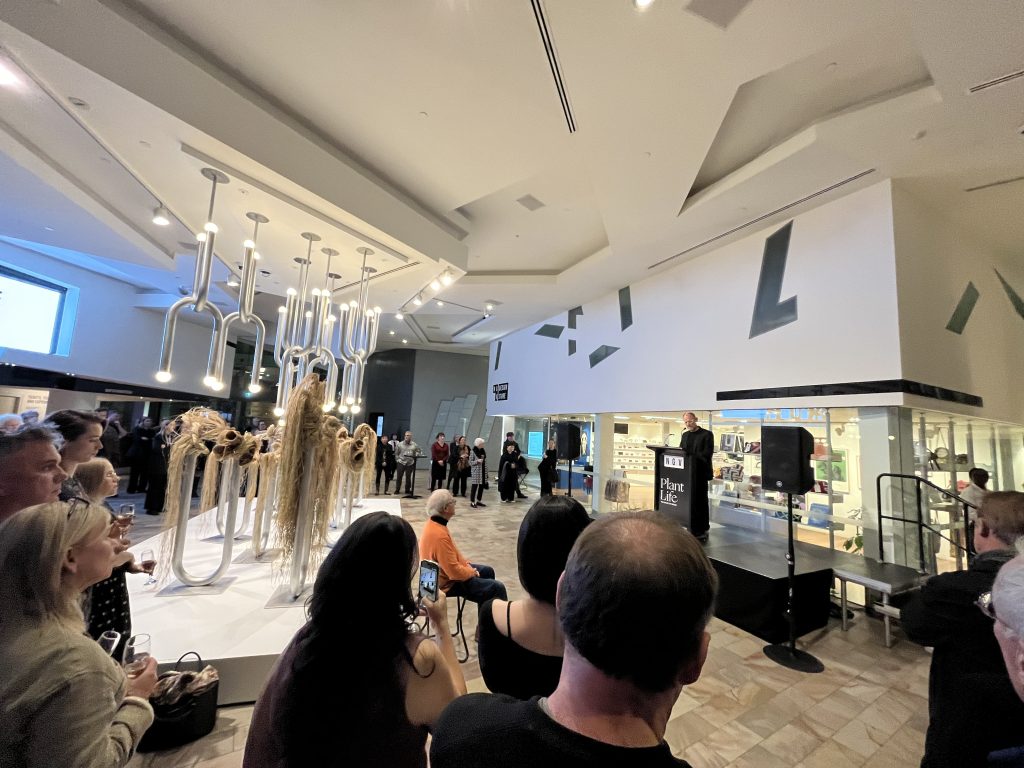
McEoin is careful to frame this as neither innovation-worship nor nostalgia. Quoting Andy Marks, founder of the Symbiosis Institute, he closes his opening remarks on a single line: for billions of years, plants have woven new life around the Earth, and that cooperation — life working with life to further life — has been the defining feature of the system. It isn’t offered as a moral lesson borrowed from nature. It’s closer to an observation about how a mutualistic, cyclical material economy, one built on nutrient exchange, decay, and regrowth rather than extraction, has simply persisted, largely undisturbed, for far longer than any human institution has existed. Even the exhibition’s own plinths are made from Plancore, a 100% Australian hemp-based board bound with Plantix bioresin — biodegradable, carbon negative — performing the same argument the objects on top of them are making.
When the incentives invert
At a Wheeler Centre / RMIT talk the same week, Cory Doctorow was describing the opposite kind of system, and naming exactly why it behaves the way it does. His subject is enshittification: the now-familiar experience of a platform getting steadily worse for its users, its business customers, and eventually even its own shareholders, in that order. His argument is that this isn’t destiny. He rejects what he calls a “Lapsarian teleology” — the idea that platforms rotting is some iron law of technology or capitalism working itself out, a fall from grace baked into the medium. Instead, he traces it to specific, reversible policy choices: the sustained weakening of antitrust enforcement from the 1980s onward, and anti-circumvention law — originally the DMCA, now written into trade agreements worldwide — that makes it illegal to modify, repair, or route around a platform’s decisions, even when those decisions actively harm you.
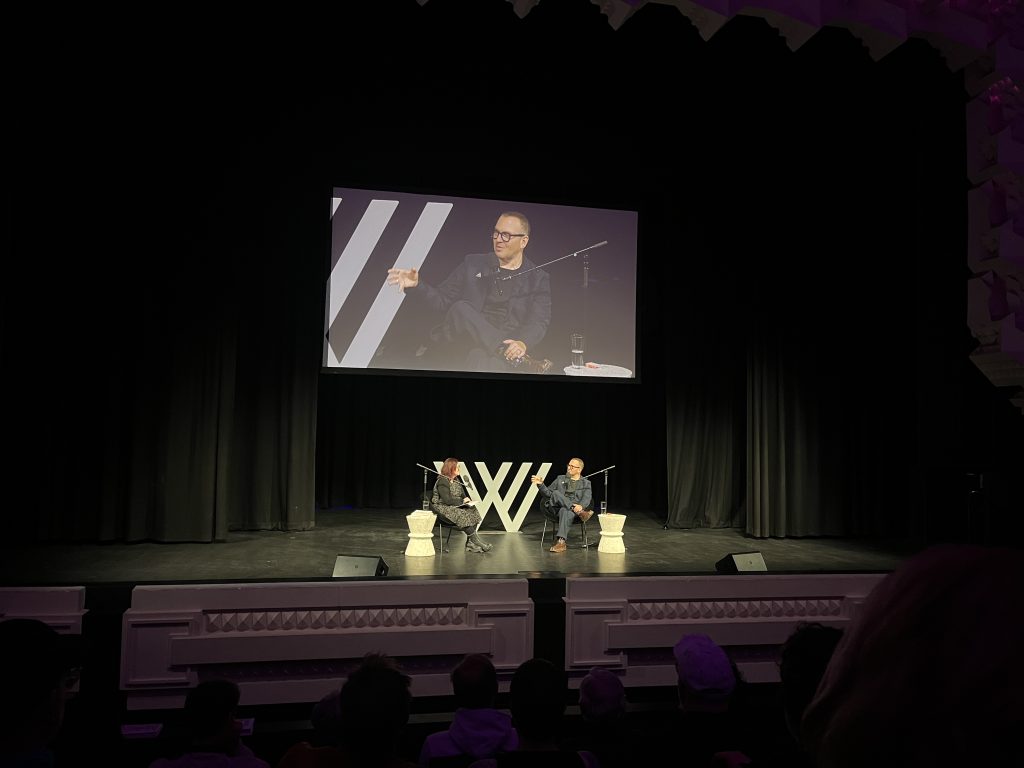
His case study is a piece of testimony that surfaced in a Google antitrust disclosure. In 2019, search revenue growth stalled at roughly 90% market share — there was, structurally, nowhere further to grow. A revenue executive proposed deliberately degrading the quality of search results, on the logic that a user forced to search two or three times to find what they wanted would see twice or three times as many ads along the way. A technologist who had built much of the infrastructure argued against it, and lost — not on the merits of the argument, but because Google had already spent years cornering search boxes on every device and browser on Earth. There was no competitor left to defect to, no regulator with the appetite to intervene, and no internal dissent with enough leverage to be heard. Doctorow’s term for this is a fitness factor: build an environment where worse conduct is rewarded, and worse conduct — and the people willing to enact it — will reliably rise inside it.
Two systems, one honest question
Put those two systems side by side and the contrast is exact, and it isn’t a contrast between good actors and bad ones. A plant-based material economy persists on mutual benefit because nothing has forced a shortcut into it — there’s no competitor rewarding a tree for hoarding nitrogen at a neighbouring plant’s expense. A platform monopoly rewards defection because a firm insulated from competition, from regulation, and from its own workforce’s objections has no remaining pressure pointing it toward anything but short-term extraction. Neither system is moral or immoral by design. Each is simply structured to sustain whatever it’s actually built to reward, and the wool blanket, hemp plinth, or search algorithm sitting in front of you is downstream of that structure, not a referendum on the character of whoever made it.
Doctorow’s closing point is that none of this is fixed. Optimism and pessimism, he argues, are both “species of fatalism” — both assume the future’s shape has already been decided, one way or the other. Reverse the specific policies that let defection outcompete cooperation inside firms, and you reverse what those firms are structured to reward. The Plant Life exhibition is making a version of the same claim from the opposite direction: the shift back toward cooperative, circular material systems isn’t owed to nostalgia for a plant-based past, but to the far more practical work of redesigning which behaviours a material economy actually rewards.
Which leaves the same question sitting between an exhibition floor and a courtroom disclosure: cooperation was never the harder thing to sustain. Building a system that rewards its absence is the harder, and far more deliberate, achievement.
Related posts
Small enough to knock on the door
You’ll have to put up with as few too many posts from me during the Energy Futures season for RMIT R...
The Model Is the Problem, Not the Technology
A Speedy report back on last nights opening RMIT Regenerative Futures Institute Explainer event that...

Staying in the Aporia
Augustine, writing to God in Book XI of the Confessions, admits he doesn’t know what time is....
Pirate DRS 2026
Thank you to all the speakers who survived the onslaught of “walk the plank”, “pir...
Data Otherwise
Data Otherwise: More-than-Human Data Practices at DRS 2026 What if the problem with data isn’t...
DRS 2026 summary and list of RMIT papers
I’ve been fortunate to be at DRS 2026 in Edinburgh this week, about to catch a train and then...
Making Knowledge, Fragmenting Certainty
Friday 22nd, 2026 at Monash, design researchers presented artifacts from their practice—Jon McCormac...
YOU ARE NOT FEEDSTOCK
Last week at The Capitol Melbourne, we launched the RMIT Regenerative Futures Institute. I want to t...
What Doesn’t Need To Be New: Two Launches, One Week, One Paradox
Last week brought two events exploring regenerative futures from very different angles. On one after...
What does it mean for a university to be alive?
The RSA (The royal society for arts, manufactures and commerce), RMIT’s Regenerative Futures I...
Launching RFI…!
Universities are extraordinarily good at adding things. Sustainability offices. Innovation hubs. Int...
Three provocations on designing futures worth watching / reflecting…
Over recent weeks, we’ve been hosting talks from visitors who come through Melbourne. Always fun to...
What Would It Take to Read the Label?
February’s Futures Collider at RFI put three provocations in a room and asked people to act ou...
What Gets Counted When Institutions Choose Speed
Two Sessions at FACT 2026 Reflections on qualitative knowledge, AI efficiency pressures, and what ge...
Two Rooms, Two Temporalities
Two events at RMIT over the past couple of weeks revisited the temporal challenges at the heart of h...

Temporal Traps
Ending the year between collapse and care: three December gatherings on time, action, and giving bac...