The Model Is the Problem, Not the Technology
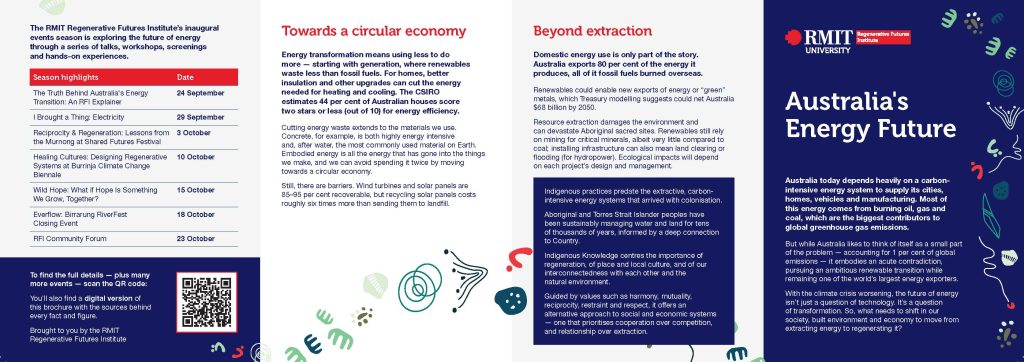
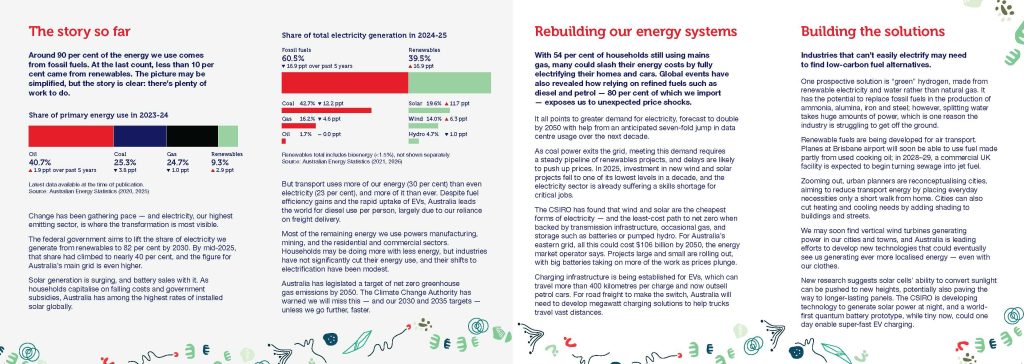
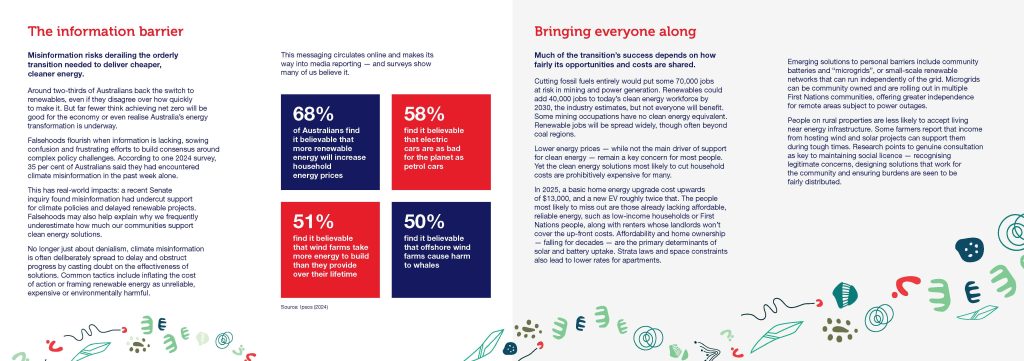
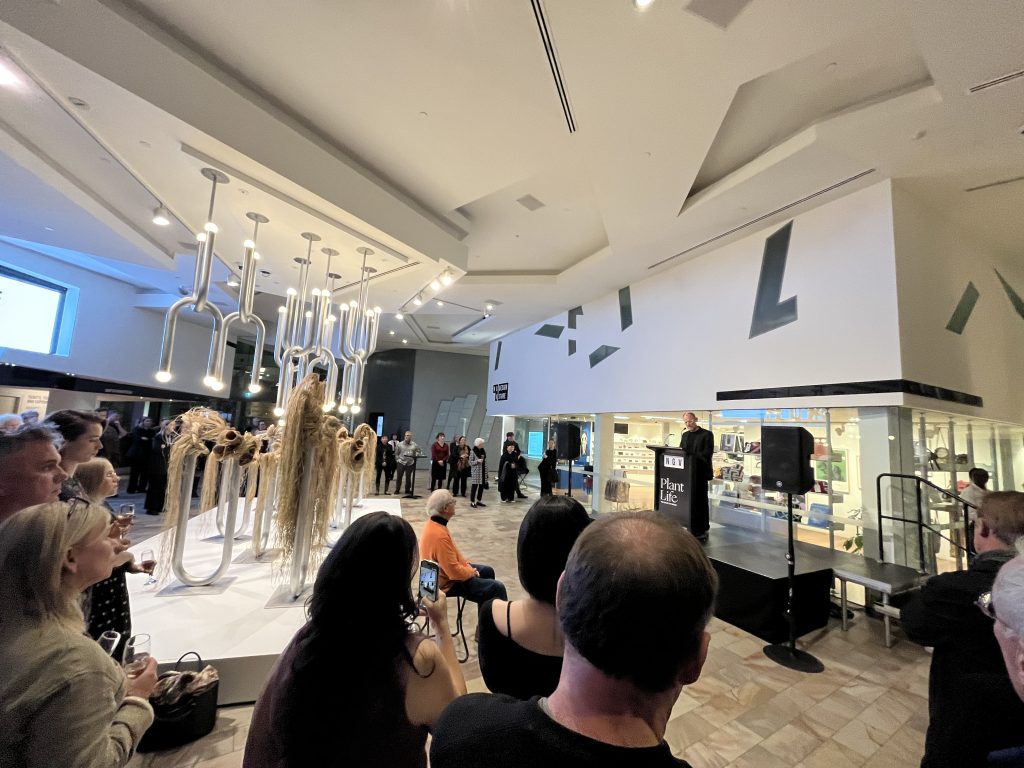
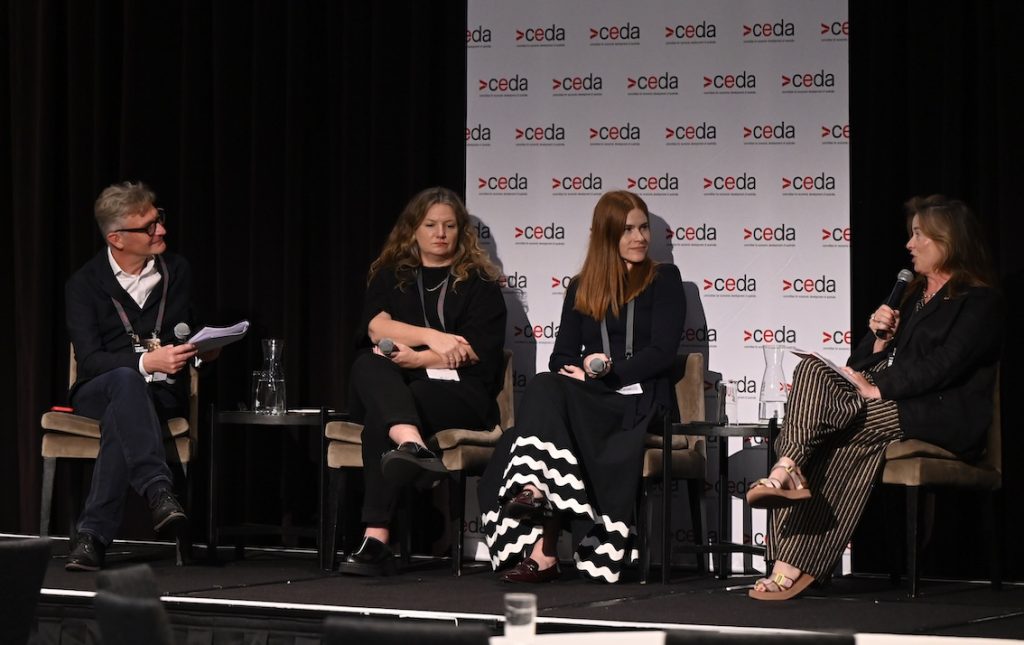
A Speedy report back on last nights opening RMIT Regenerative Futures Institute Explainer event that came with a fold-out – see pics, a guide designed to help the public navigate the genuinely complicated journey toward clean energy. Chaired by the ever present Tamara DiMattina, the panel untangled just some of the complications…
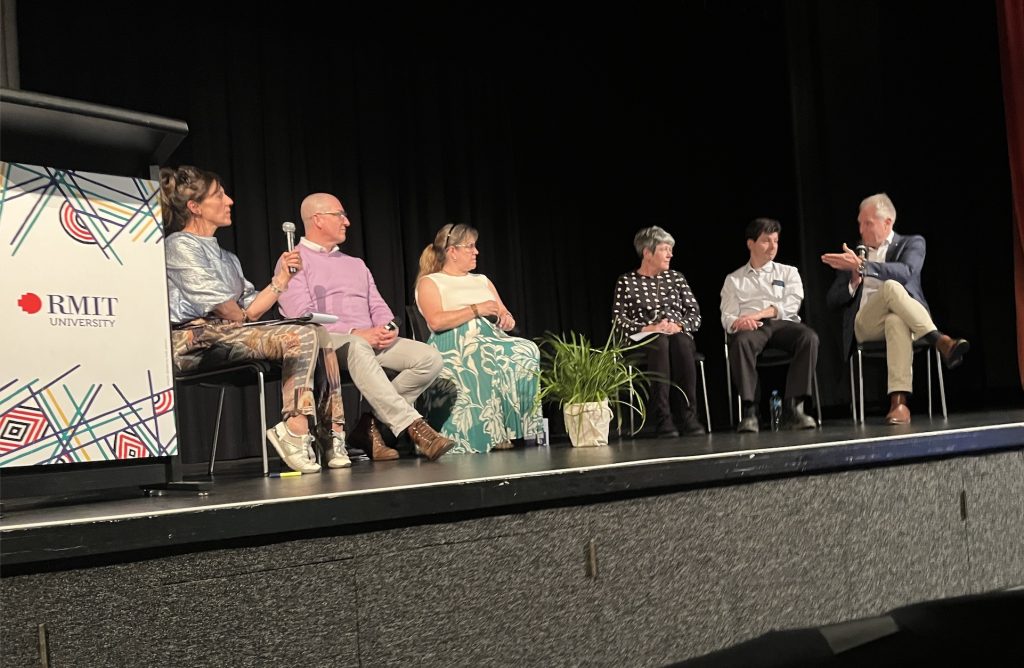
Carol Janson Bond, PhD made a point that reframed most of the night: the biggest obstacle isn’t the turbines, batteries, or grid. It’s a 19th-century business model, hierarchical, siloed, that treats sustainability as bolted onto a company rather than built into how it’s structured, and dropped the moment shareholders get nervous.
Petros Lappas, PhD explored the same point from the lab bench. Ammonia, a renewable fuel he’s researching for trucks and planes, costs around $600 a ton on-farm, versus $1,400 bought from a company, commercially unfeasible. Same fuel, different economics, depending on who captures the margin. Sam Humffray who’s spent two decades building wind farms, put the structural version of it plainly: roads and rail get built through a coordinated national program, renewables still get built one project at a time, by individual developers, on what he half-joked was luck as much as planning “a project isn’t ready until it’s failed once or twice first.”
The second thread was about noise: the gap between how loud opposition to renewables sounds and how much exists. Arron Wood AM cited election research: in one National Party electorate that got heavy airtime for its anti-renewables stance, 60% of constituents actually supported renewable energy. The opposition wasn’t an accident of democracy, it was funded. Professor Lisa Waller was blunt about the word: drop “misinformation,” since that implies an innocent error, this is disinformation, intentional and organised. Facebook groups opposing offshore wind in Port Stephens traced back to one New Zealand funder, the same network behind the referendum’s no-vote campaign.
Wood raised a hopeful thread on the same fault line: 43% of Australia’s renewable projects sit on First Nations land, and the real question is whether that stays as rent or becomes genuine equity, as it increasingly does in Canada, where over 20% of clean energy projects carry First Nations equity, backed by a $10 billion government guarantee fund. Same instinct as the ammonia and the roads: does the structure let people enact some agency, or just get paid to stand nearby.
The gap between where we are and where the room wanted to go isn’t wind speed or public appetite. It’s a business model dating back to the 19th Century.
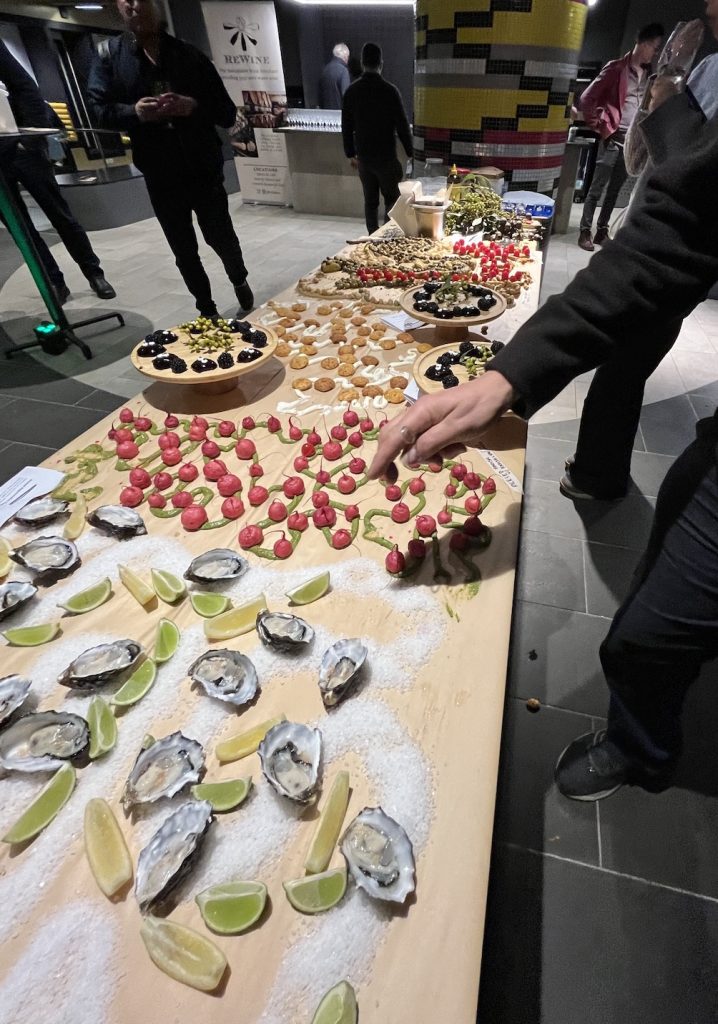
The spectacular locally sourced spread of food provided by the ever imaginative Helen Addison-Smith.
#energytransition#regenerativefutures#disinformation#renewables
Related posts
Cooperation, or the Lack of It
Two events I attended recently, on the surface, have almost nothing in common — one was an exhibitio...

Staying in the Aporia
Augustine, writing to God in Book XI of the Confessions, admits he doesn’t know what time is....
Pirate DRS 2026
Thank you to all the speakers who survived the onslaught of “walk the plank”, “pir...
Data Otherwise
Data Otherwise: More-than-Human Data Practices at DRS 2026 What if the problem with data isn’t...
DRS 2026 summary and list of RMIT papers
I’ve been fortunate to be at DRS 2026 in Edinburgh this week, about to catch a train and then...
Making Knowledge, Fragmenting Certainty
Friday 22nd, 2026 at Monash, design researchers presented artifacts from their practice—Jon McCormac...
YOU ARE NOT FEEDSTOCK
Last week at The Capitol Melbourne, we launched the RMIT Regenerative Futures Institute. I want to t...
What Doesn’t Need To Be New: Two Launches, One Week, One Paradox
Last week brought two events exploring regenerative futures from very different angles. On one after...

What does it mean for a university to be alive?
The RSA (The royal society for arts, manufactures and commerce), RMIT’s Regenerative Futures I...
Launching RFI…!
Universities are extraordinarily good at adding things. Sustainability offices. Innovation hubs. Int...
Three provocations on designing futures worth watching / reflecting…
Over recent weeks, we’ve been hosting talks from visitors who come through Melbourne. Always fun to...
What Would It Take to Read the Label?
February’s Futures Collider at RFI put three provocations in a room and asked people to act ou...
What Gets Counted When Institutions Choose Speed
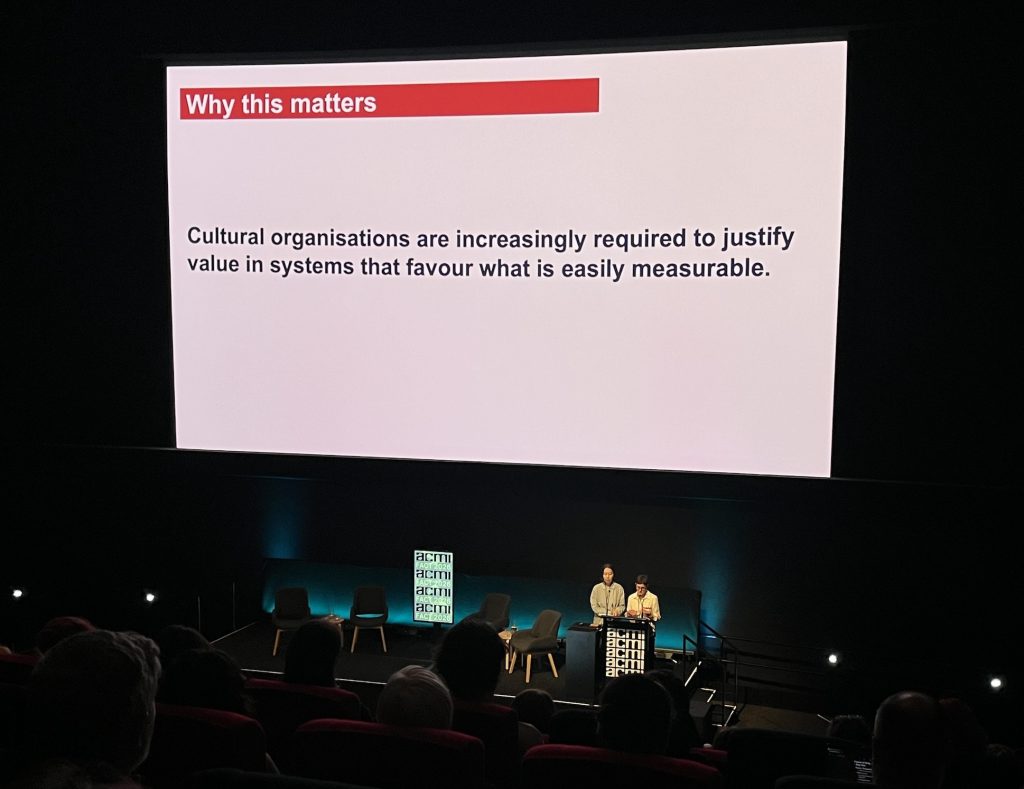
Two Sessions at FACT 2026 Reflections on qualitative knowledge, AI efficiency pressures, and what ge...
Two Rooms, Two Temporalities
Two events at RMIT over the past couple of weeks revisited the temporal challenges at the heart of h...

Temporal Traps
Ending the year between collapse and care: three December gatherings on time, action, and giving bac...

Notes toward the 6th finger
I’ve spent 20 years watching designers optimise products that score well environmentally while...