Tearing up Wild Hope, and sharing it like a meal
Two quite different events in the same week in October have stayed with me, partly because of what was said at each of them, but mostly because of what happened when people were asked to share something with one another, and how the act of sharing seemed to change the thing being shared. One was the Melbourne launch of Claire Scobie‘s new book, Wild Hope, and the other was a lunch on RMIT’s Bundoora campus about the food we eat there. I hadn’t expected them to have much to do with each other, but the more I think about them, the more they seem to be about the same thing.
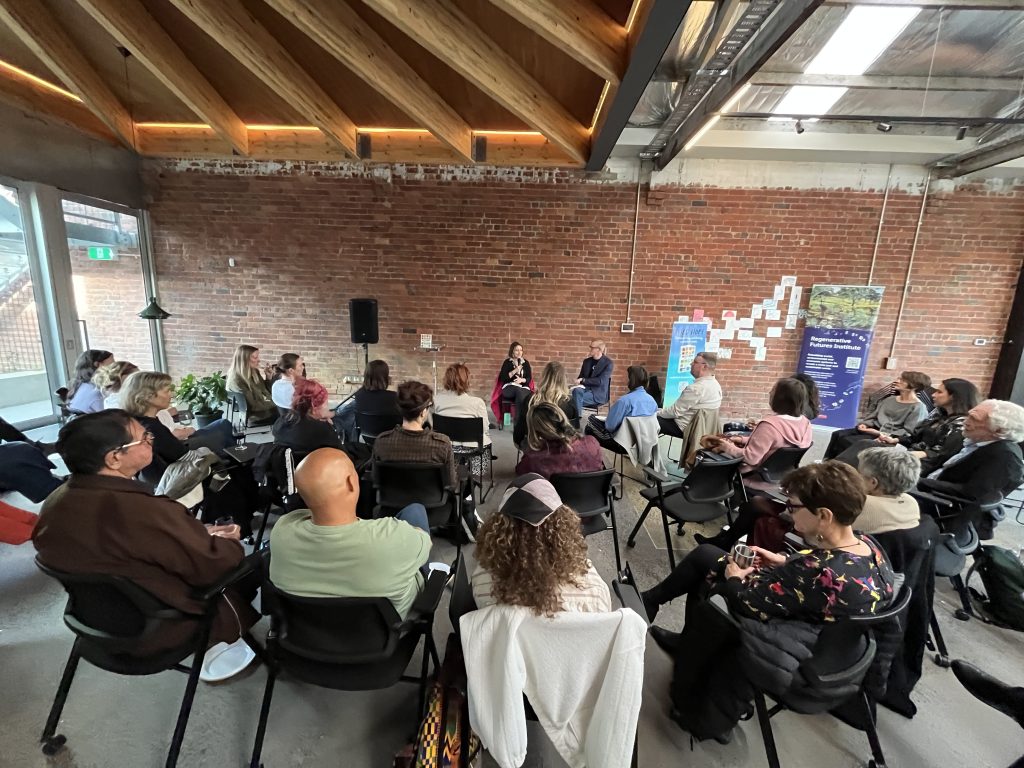
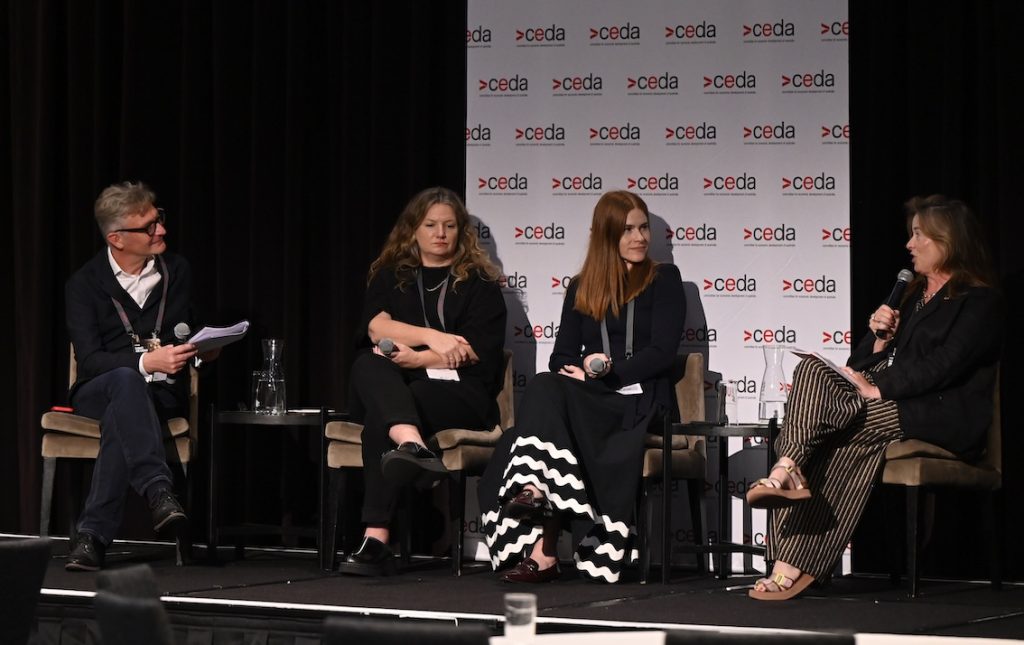
At the launch, Claire was in conversation with Kaj Löfgren from Regen Melbourne, and she began by explaining that the book had originally been called Up the Creek, because for a long time that was exactly how she felt, until her publisher read the manuscript and told her it was far more hopeful than she was letting it be. She resisted the new title at first, worried about offering false comfort at a moment like this, but came to see that the people she had been writing about really were wild, in the sense that they don’t wait for permission, and hopeful, in the sense that their hope is a form of action rather than a mood.
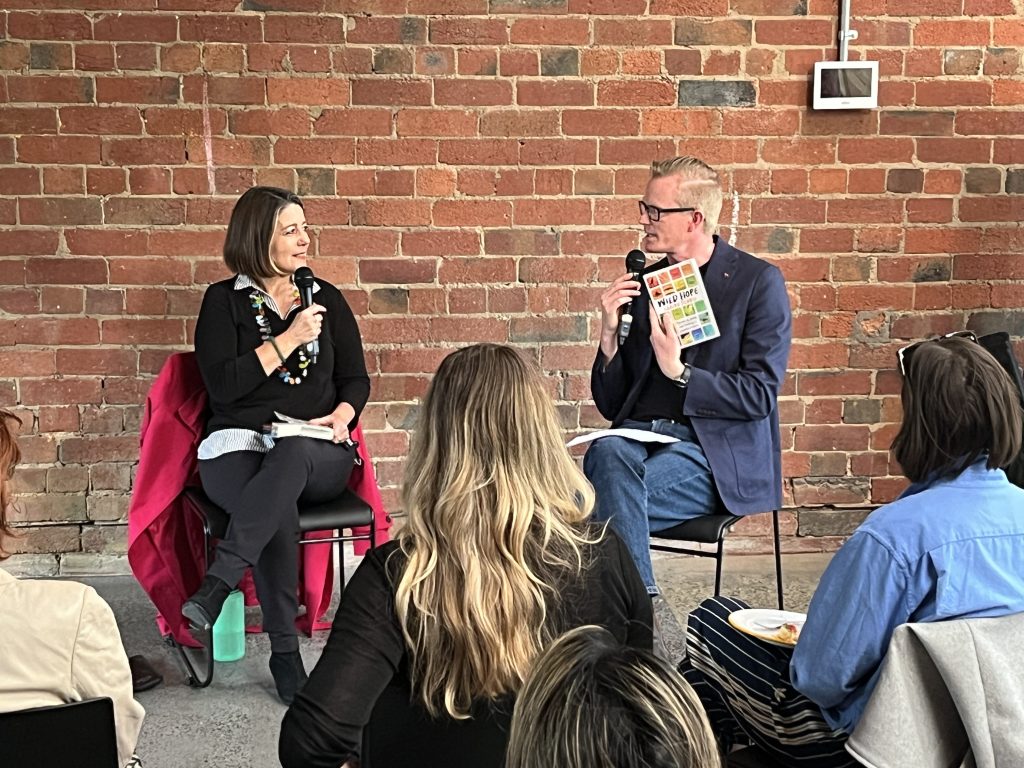
The stories she told on the night were about what she calls islands of coherence, and the lighthouses that allow them to grow. One was the revival of the Gumbaynggirr language on the mid north coast of New South Wales, from the Muurrbay cooperative in Nambucca to a bilingual school in Coffs Harbour, where Claire sat through a 45-minute assembly in which no English was spoken at all. Another was Lee in Carrickfergus, near Belfast, who began with a Facebook page in a town where everyone agreed the place was in decline, and ended up running a cooperative greengrocer from which Northern Ireland’s minister later launched the national food strategy. When Claire called it a shop, Lee corrected her, insisting that it was an intervention in the food system. Closer to home, Sky described the work on the Birrarung as making not a city with a river, but a river with a city.
Claire also talked about stories as a kind of technology, both for making sense of what is happening to us and, more deeply, as a form of rehearsal, a way of stepping a little way into the future and bringing that image back to help us act in a time of radical uncertainty. She noticed that the people she interviewed kept telling her versions of the same story, so that Kaj’s account of Regen Melbourne simply telling the council what it was doing, and inviting it to join in, was echoed almost word for word by Lee in Belfast and again by people in Bristol, and part of what the book does is connect those dots.
What has stayed with me most, though, is what happened at the end of the evening, when Claire took a copy of her own book and tore it apart, to an audible intake of breath from a room full of people who love books. Everyone was handed a page and a pen, and asked not to read it closely but to scan it and mark whatever jumped out at them. We then passed our pages from hand to hand for half a minute or so, until each of us was holding a page someone else had marked, and turned to a neighbour, preferably a stranger, to talk about what we had found and whether anything connected. Some people noticed the same word, cracked, recurring across two farmers’ stories, while others found that a passage about interconnected crises answered a line on a page further on. Finally the pages were gathered back into the book, though not in their original sequence, so that page 30 now comes first, page 2 second and page 18 third, leaving a copy of Wild Hope in a new order, or perhaps a new disorder, that had been put together by the people who shared it.
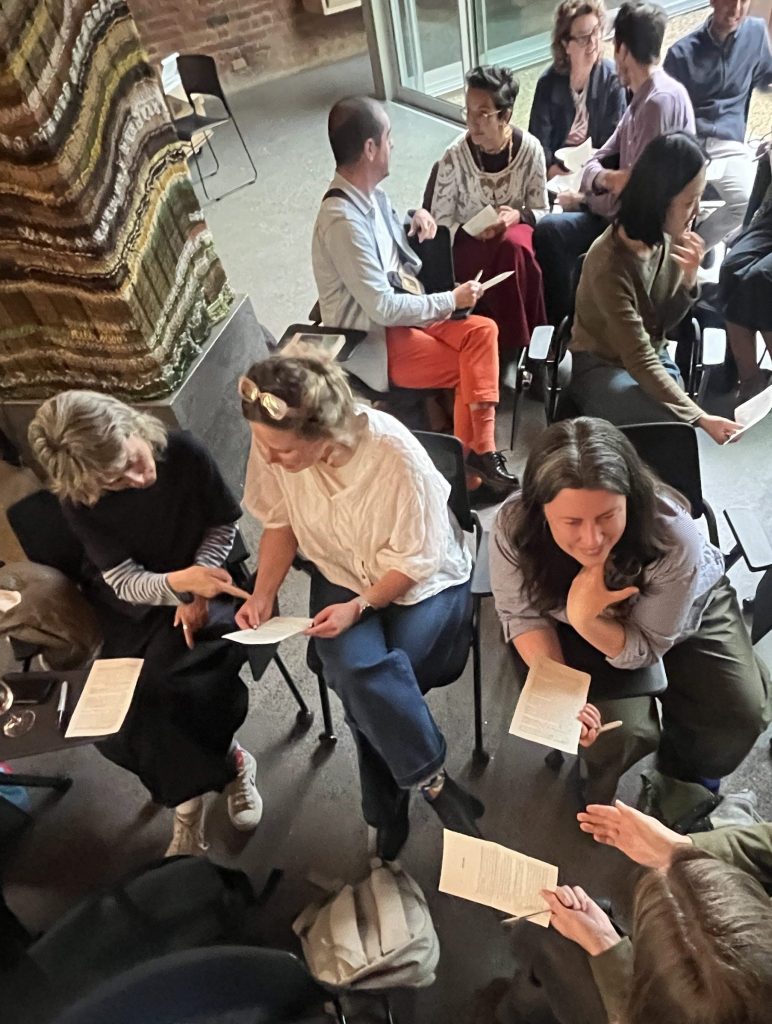
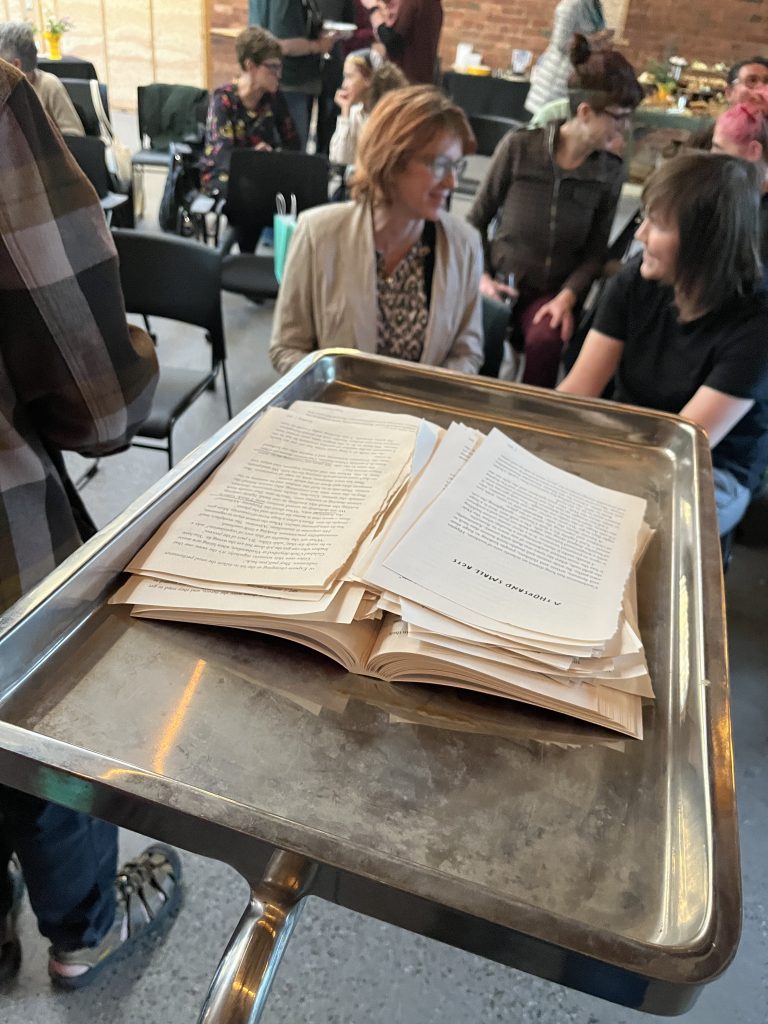
It struck me at the time that the whole exercise felt a lot like sharing food, and it seems fitting that the moment the pages had been gathered up, we moved straight on to eating together. Something whole was broken into pieces, passed around the room and taken in by different people, each of whom found something slightly different in their share, and the book ended up meaning more for having been divided than it would have done sitting intact on a shelf. A book is usually something we consume alone, but on that evening it became something closer to a meal, where the value lies as much in who you are sitting next to as in what is on the plate.
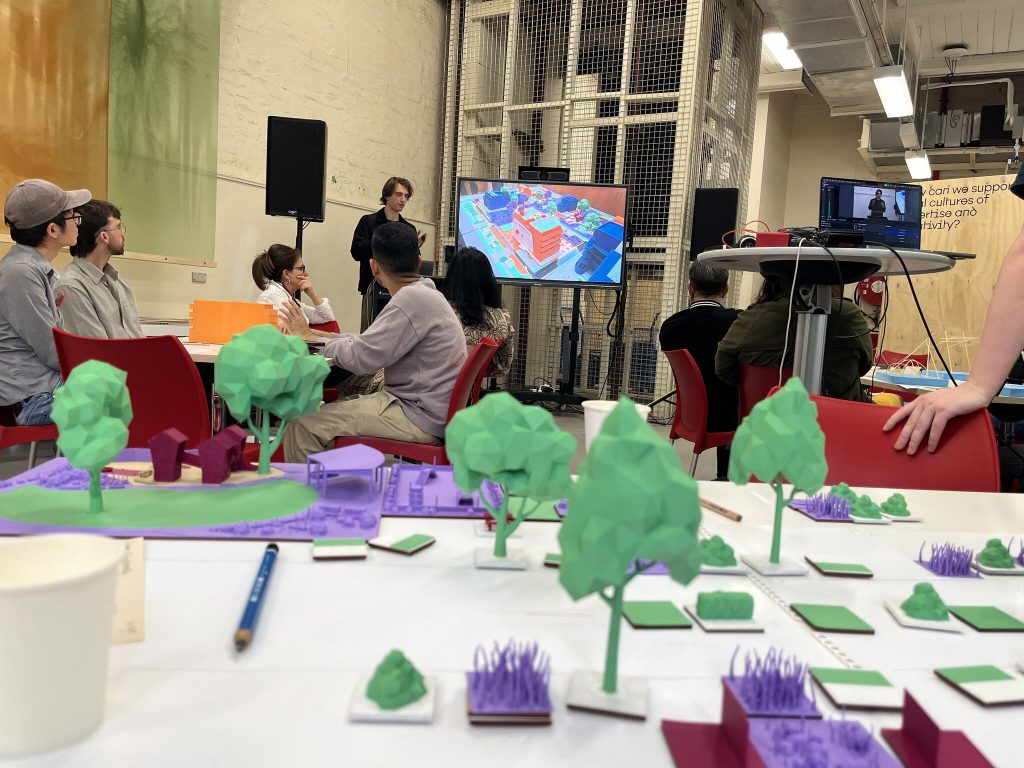
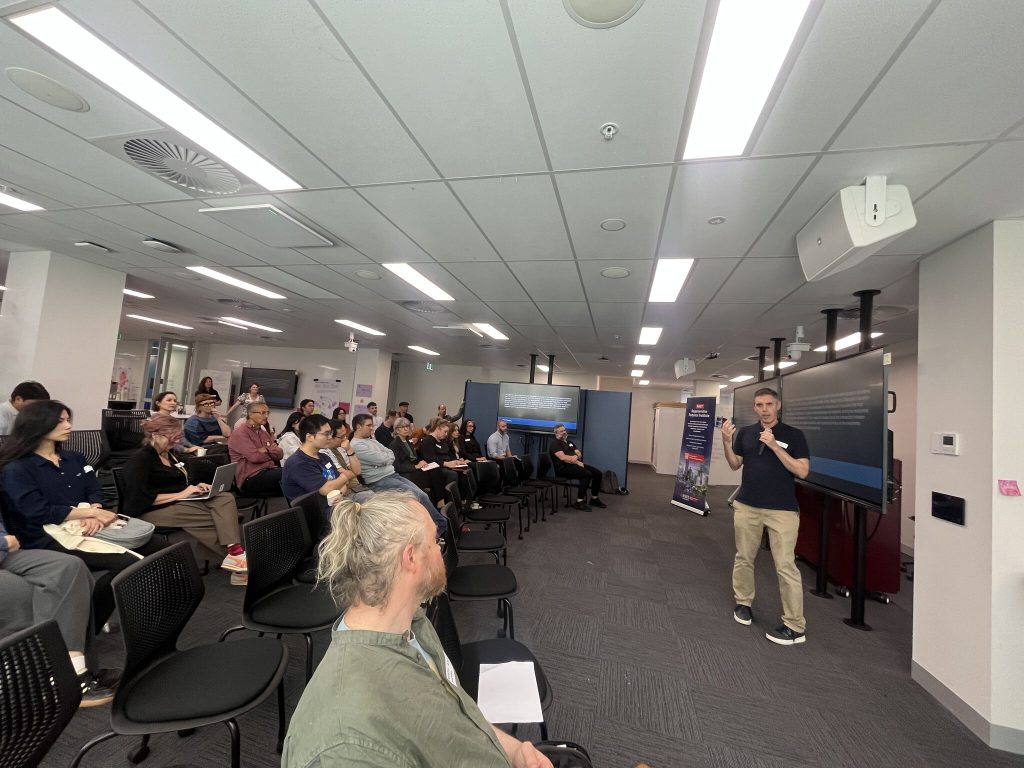
Which brings me to Bundoora, where the Regenerative Futures Institute hosted Campus Table #2: Nourishing Bundoora, as part of our Energy Futures series. The idea behind Campus Table is that there is another kind of energy a university needs alongside the electrical kind, made up of the relationships, shared understanding and collective capacity that allow a place to change. Over a free lunch, students, staff and people from across RMIT who shape food and campus life sat down together to talk about what we can buy at Bundoora, how affordable, nutritious and inclusive it is, where people are able to prepare and eat food, and how the university supports those experiencing food insecurity. [One or two moments from the lunch: something someone said, an idea that came up, or a surprise.]
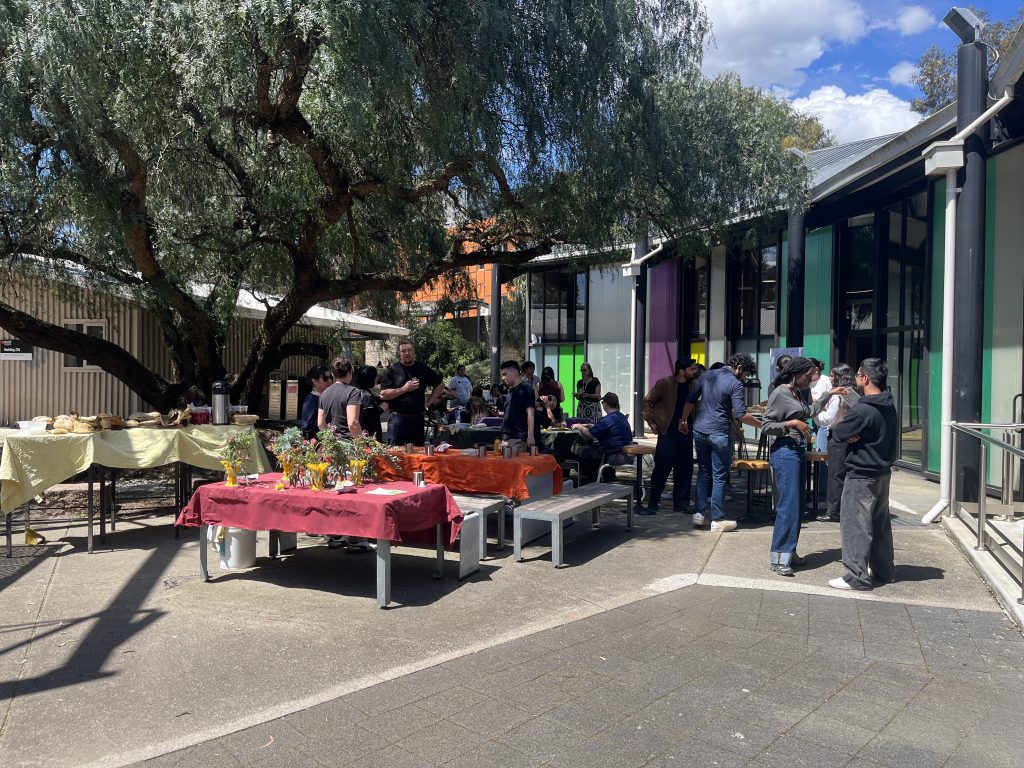
Like Lee’s greengrocer, a lunch like this is perceptible to the current system as exactly what it appears to be, a group of people eating together, while also being a small intervention in the food environment of a campus, one that doesn’t wait for a strategy to be approved before bringing together the people who might change it.
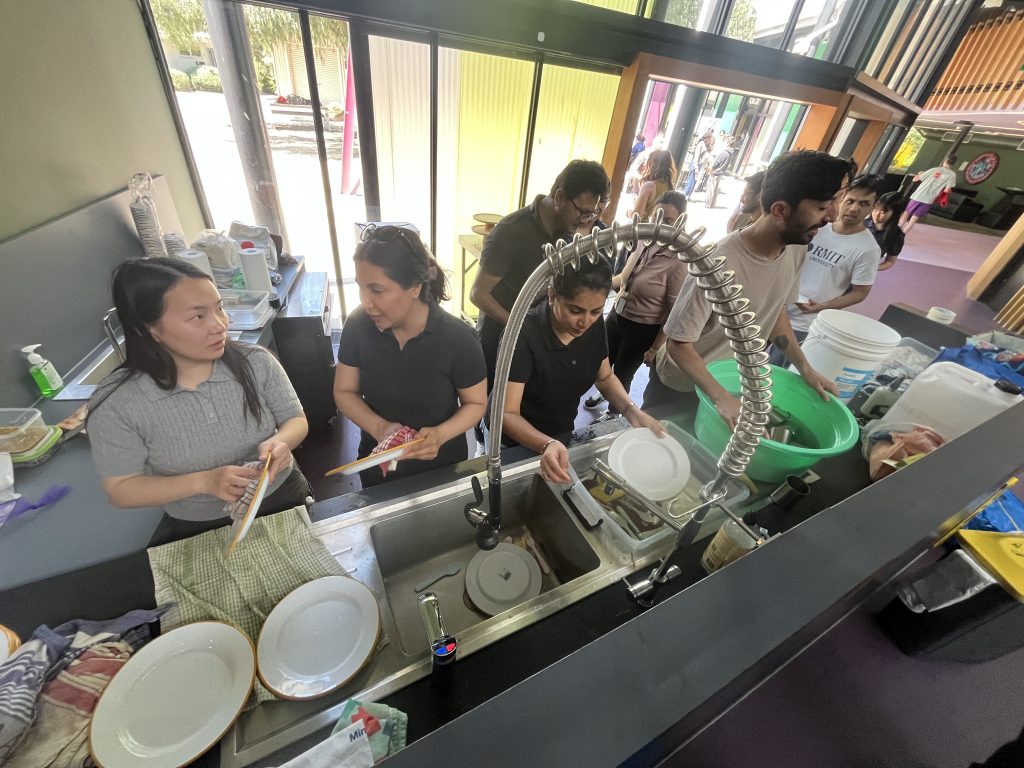
In both cases, the value seemed to lie less in the object at the centre of the table, whether a book or a meal, than in the conversations and connections that formed as it was passed between people who might not otherwise have crossed paths. Towards the end of the launch, Claire mentioned that she hopes to bring some of the people in the book together for Wild Hope conversations of their own, and said that she had thought the book was the end, but has realised it is actually the beginning. I suspect the same might be true of a shared lunch, and I’m looking forward to finding out what grows from the next Campus Table.
Thanks to Claire and Kaj, to Regen Melbourne and Watershed for hosting the launch, and to everyone who came to the table at Bundoora.
Related posts
Hired by the Trees: Agents, Principals and Whose Data Sets the Goals
Every so often two events land close enough together that they start talking to each other, and the...
Energy Past/Present/Futures
I wrote the first version of this from an odd place in time, a week after one event and a few hours...
Small enough to knock on the door
You’ll have to put up with as few too many posts from me during the Energy Futures season for RMIT R...
The Model Is the Problem, Not the Technology
A Speedy report back on last nights opening RMIT Regenerative Futures Institute Explainer event that...
Cooperation, or the Lack of It
Two events I attended recently, on the surface, have almost nothing in common — one was an exhibitio...

Staying in the Aporia
Augustine, writing to God in Book XI of the Confessions, admits he doesn’t know what time is....
Pirate DRS 2026
Thank you to all the speakers who survived the onslaught of “walk the plank”, “pir...
Data Otherwise
Data Otherwise: More-than-Human Data Practices at DRS 2026 What if the problem with data isn’t...
DRS 2026 summary and list of RMIT papers
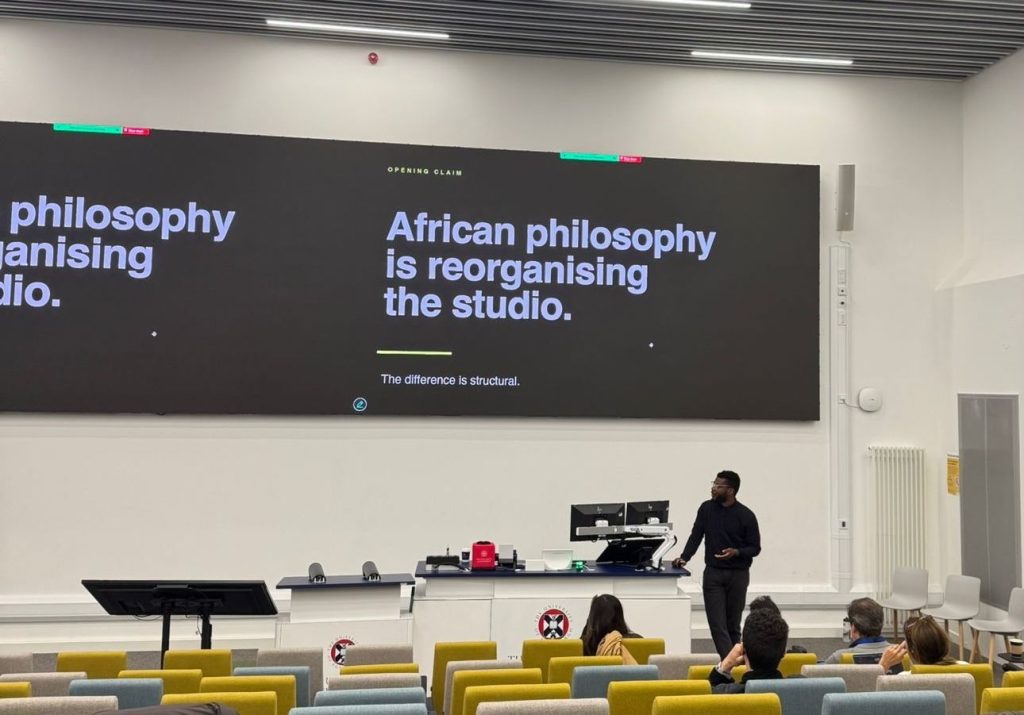
I’ve been fortunate to be at DRS 2026 in Edinburgh this week, about to catch a train and then...
Making Knowledge, Fragmenting Certainty
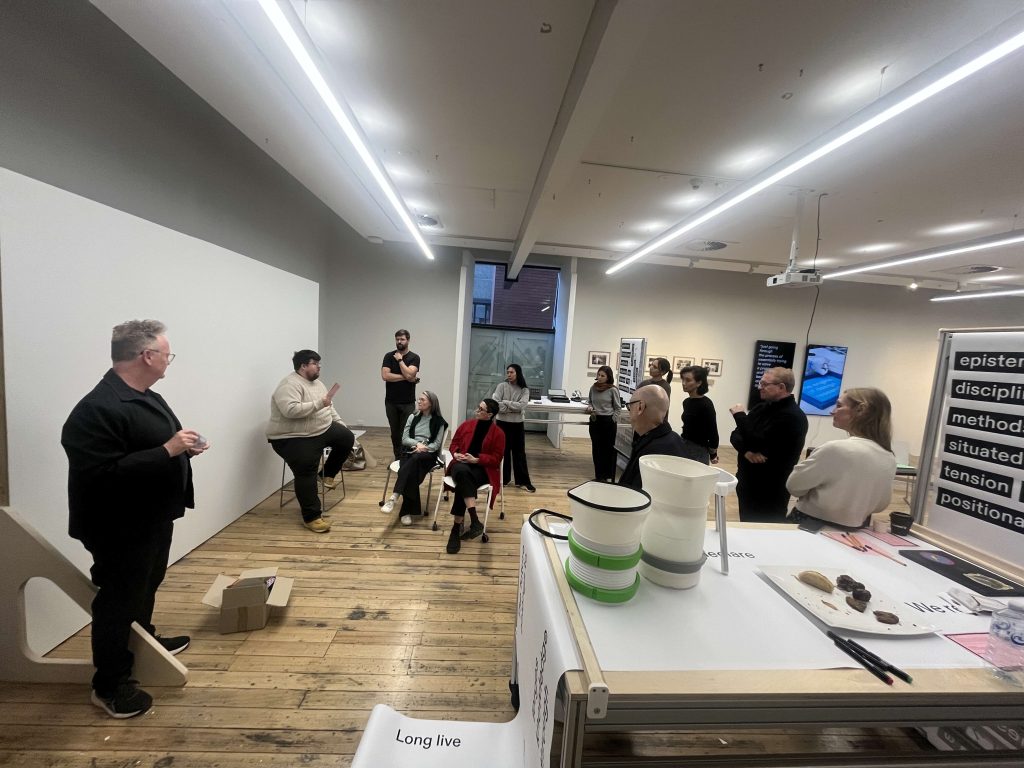
Friday 22nd, 2026 at Monash, design researchers presented artifacts from their practice—Jon McCormac...
YOU ARE NOT FEEDSTOCK
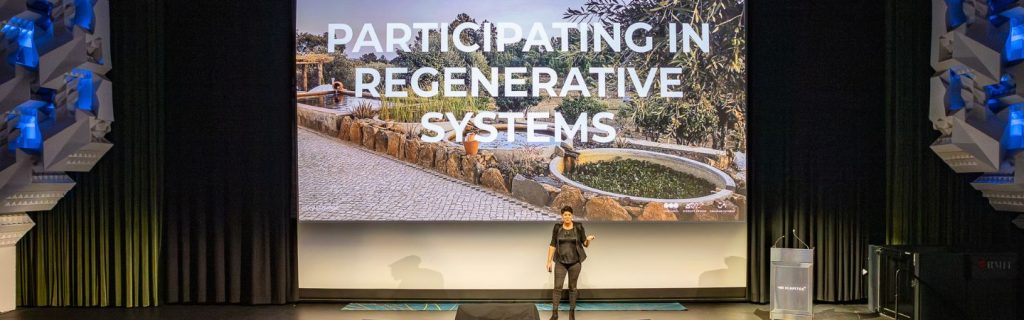
Last week at The Capitol Melbourne, we launched the RMIT Regenerative Futures Institute. I want to t...
What Doesn’t Need To Be New: Two Launches, One Week, One Paradox
Last week brought two events exploring regenerative futures from very different angles. On one after...

What does it mean for a university to be alive?
The RSA (The royal society for arts, manufactures and commerce), RMIT’s Regenerative Futures I...
Launching RFI…!
Universities are extraordinarily good at adding things. Sustainability offices. Innovation hubs. Int...
Three provocations on designing futures worth watching / reflecting…
Over recent weeks, we’ve been hosting talks from visitors who come through Melbourne. Always fun to...
What Would It Take to Read the Label?
February’s Futures Collider at RFI put three provocations in a room and asked people to act ou...